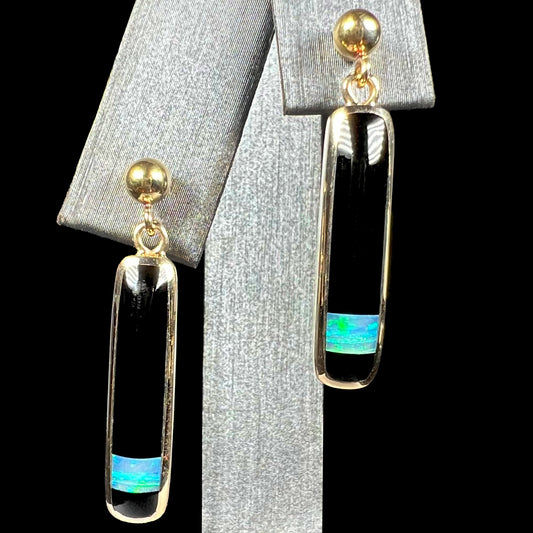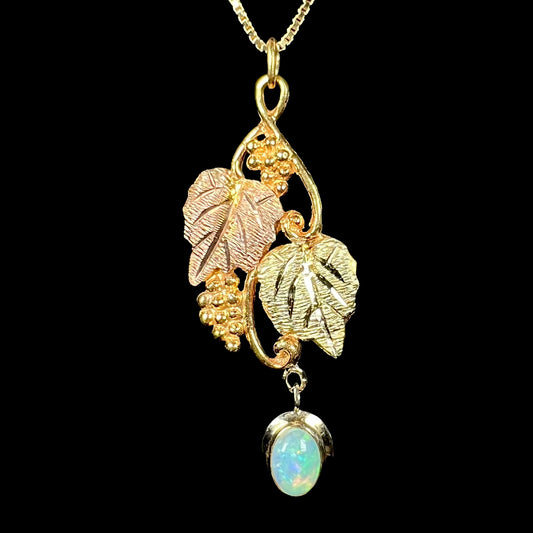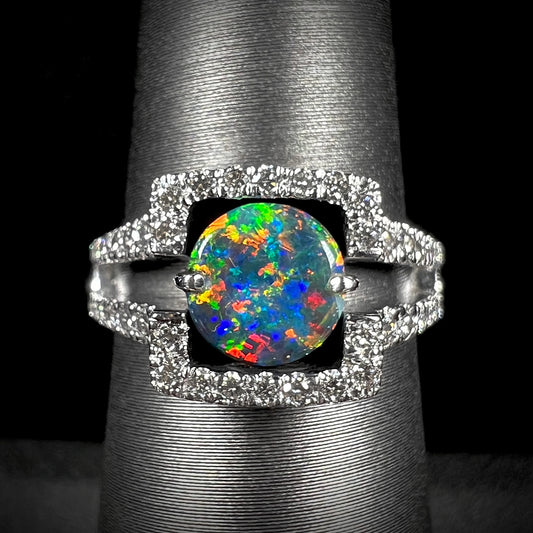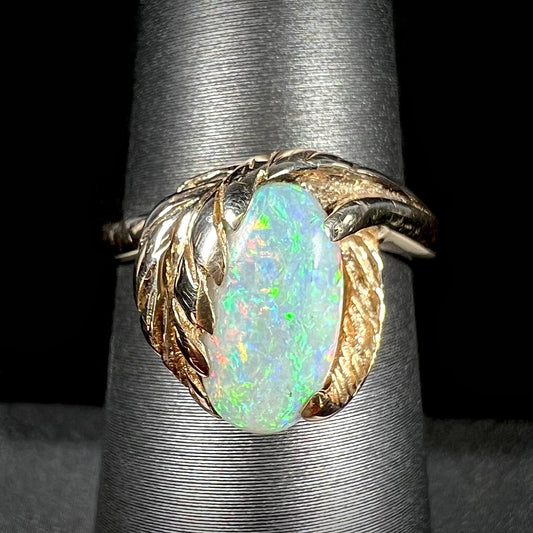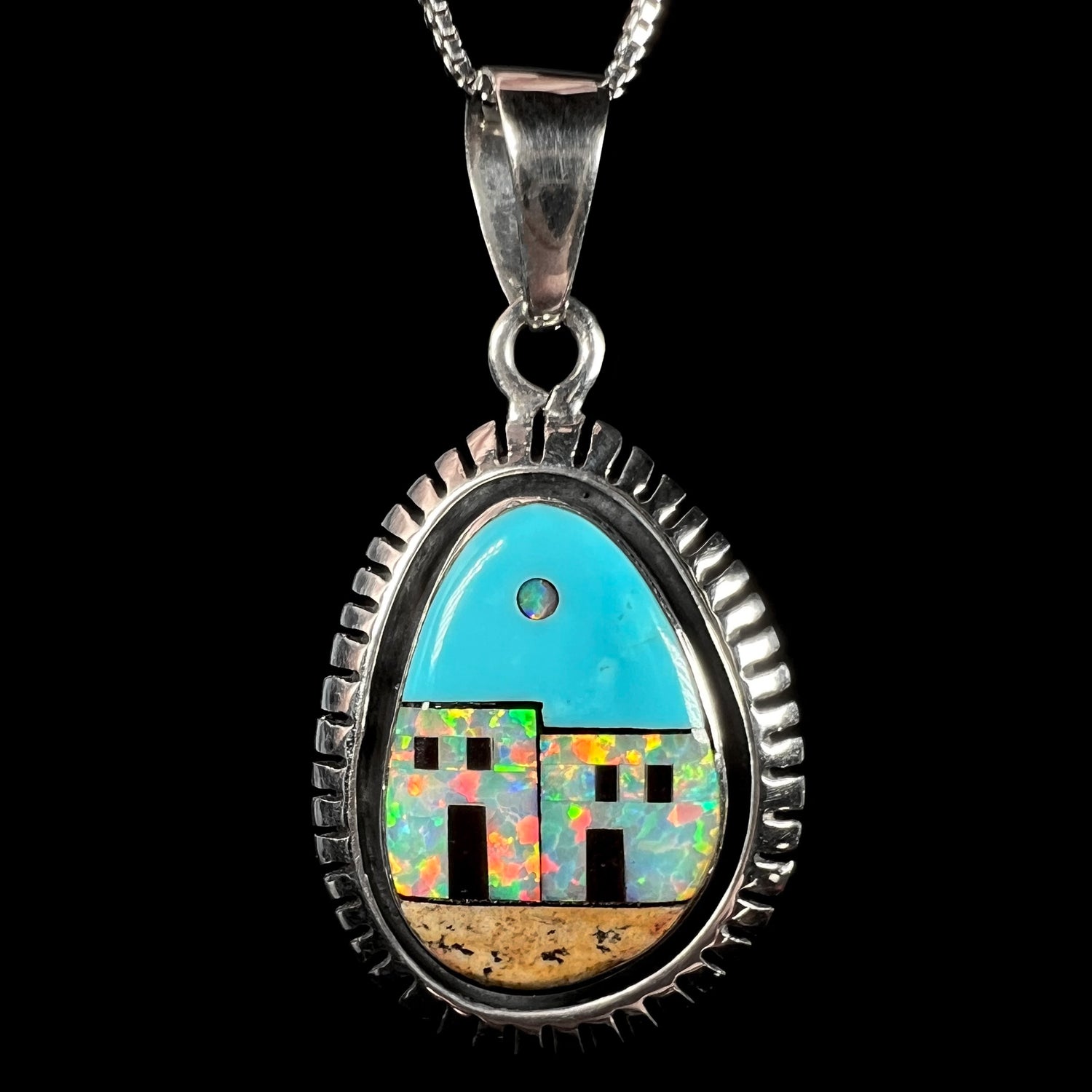
Collection: Opal Jewelry Made in the USA

Opal jewelry made in the United States reflects a tradition of independent craftsmanship—pieces shaped by individual makers, regional styles, and American workshops, rather than foreign mass production.

All OpalPop inventory ships free within the United States via USPS Priority Mail directly from our Garden Grove, California facility.


Opal Jewelry Made in the USA: A Collector's Overview

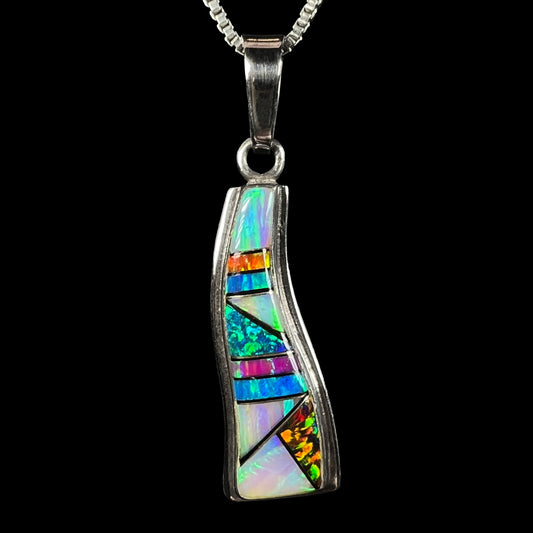
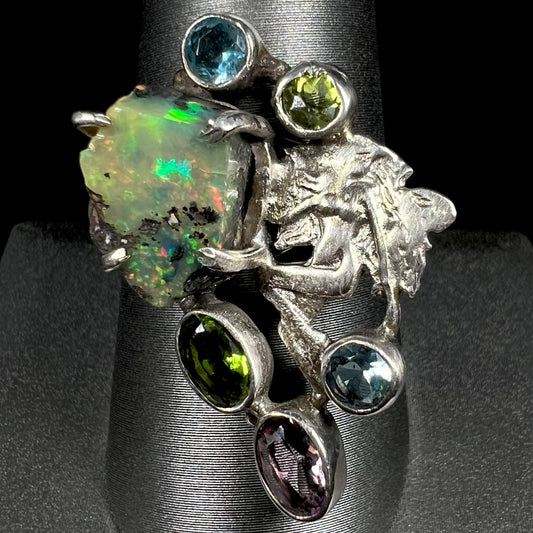
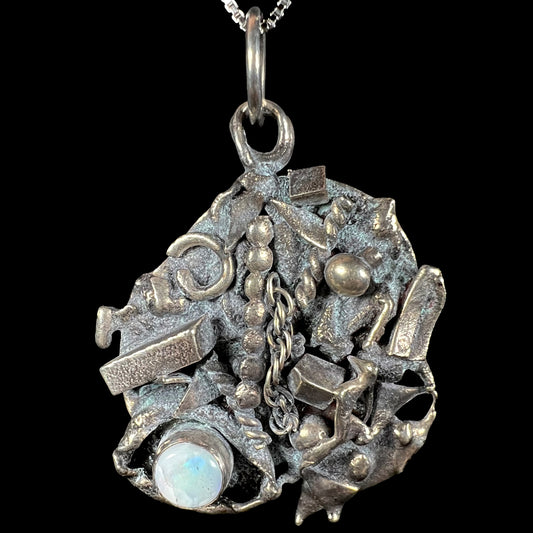
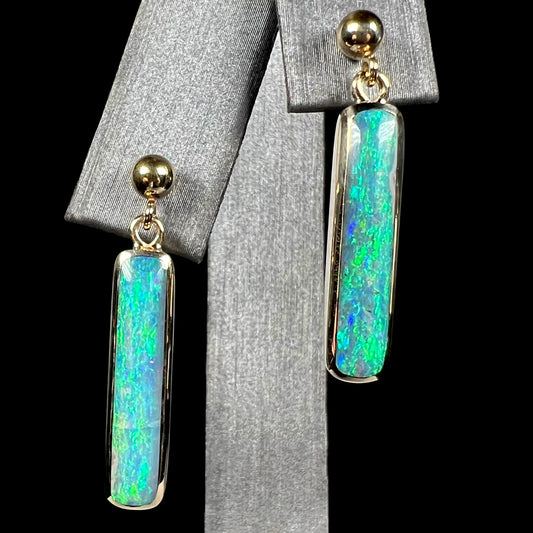
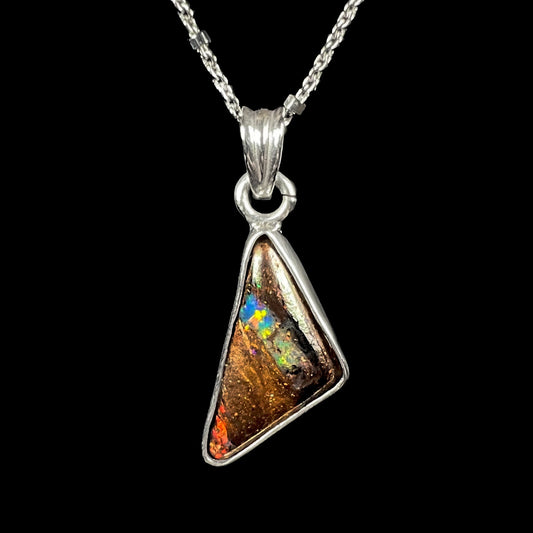
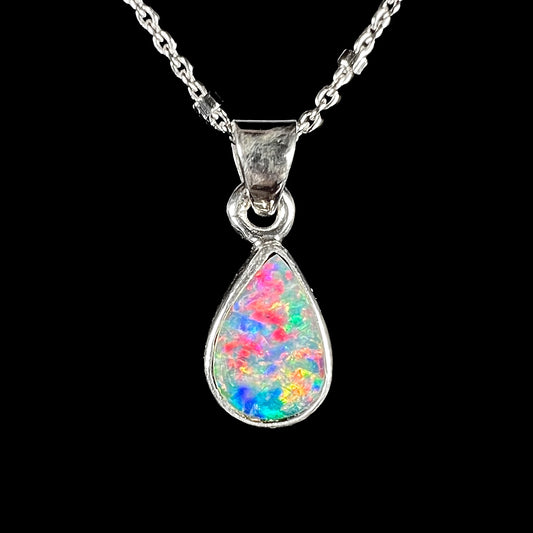
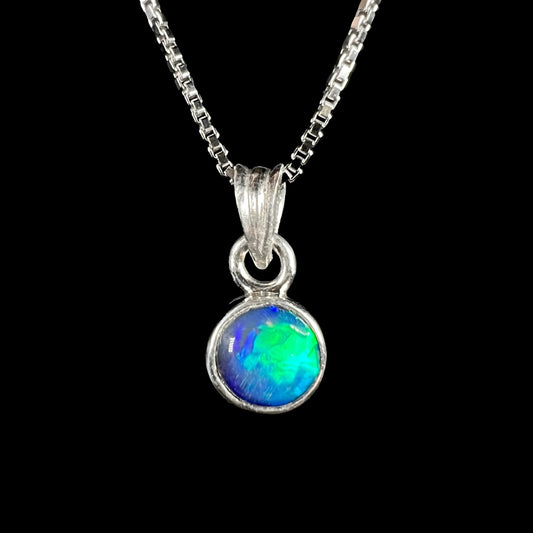
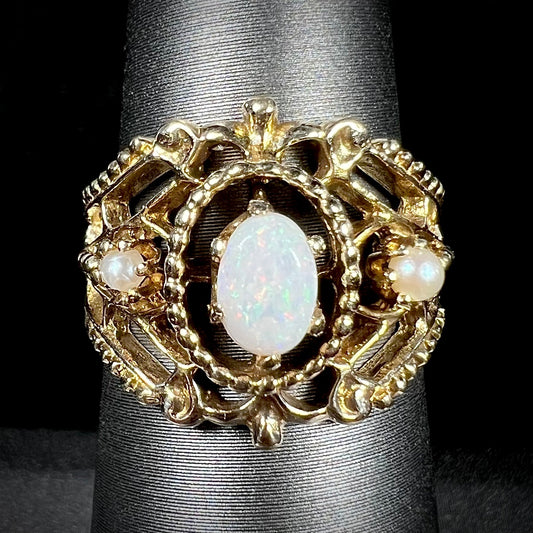
OpalPop’s collection of opal jewelry made in the United States reflects the breadth of American jewelry production—past and present.  The pieces featured here span multiple eras and regions, from vintage American workshop jewelry to contemporary one-of-a-kind pieces crafted by independent jewelers across the country.

All OpalPop inventory ships directly from our Garden Grove, California facility and is sent free within the United States via USPS Priority Mail.  Every piece you see on the site is physically held, inspected, photographed, and documented before it is offered for sale.

Below, we take a closer look at the history of American jewelry manufacturing, the styles and techniques that continue to define it, and why modern American-made opal jewelry looks the way it does today.

The Rise—and Decline—of American Jewelry Manufacturing

From the late 1800s through much of the twentieth century, the United States was one of the world’s primary jewelry manufacturing centers.  Major production hubs developed in the Northeast—particularly Rhode Island, New York, and New Jersey—where companies produced jewelry at scale using skilled domestic labor.

These factories defined entire design eras, from Art Nouveau and Art Deco through Mid-Century Modern, producing gold and silver jewelry that was both durable and stylistically consistent.  For decades, “Made in the USA” jewelry was the norm rather than the exception.

That landscape began to change in the 1980s.  Following the normalization of diplomatic relations between the United States and China in 1979, overseas manufacturing became increasingly attractive to large jewelry companies.  Lower labor costs and expanding global supply chains led to a steady migration of mass production abroad, accelerating through the 1990s and early 2000s.

While this shift dramatically reduced domestic mass manufacturing, it did not eliminate American jewelry making.  Instead, it reshaped it.

The Independent American Jeweler

As large-scale production moved overseas, independent American jewelers continued to work at the bench—designing, fabricating, and setting jewelry one piece at a time.  For many, this period marked a return to smaller workshops, custom work, and limited production rather than factory output.

At the same time, consumer preferences began to shift.  As imported jewelry became more standardized and cost-driven, interest in heavier construction, hand-worked details, and unique design quietly returned.  Estate jewelry, small studios, and independent makers became the primary sources for American-made pieces.

Much of the opal jewelry made in the United States today comes from this environment: individual workshops, small studios, and skilled hobbyists producing work that prioritizes craftsmanship over volume.

Distinct American Styles

While American jewelry is diverse, certain regional styles and traditions continue to appear more frequently.

American Southwest Jewelry

Southwest-inspired jewelry began gaining national recognition in the early twentieth century and surged in popularity during the 1970s and 1980s.  Heavy sterling silver, hand-cut bezels, layered metalwork, and the use of native stones became defining characteristics of the style.

As imports flooded the market in the 1980s, the integrity of Native American jewelry was threatened by mass-produced imitations.  This led to the Indian Arts and Crafts Act of 1990, which federally protects the labeling of authentic Native American-made work.

Today, Southwest-style jewelry continues to influence American makers of all backgrounds.  Vintage pieces with natural patina sit alongside modern interpretations produced by independent jewelers who draw inspiration from the original techniques.

Black Hills Gold

Black Hills Gold is one of the few surviving examples of traditional American mass-production jewelry.  Originating during the South Dakota gold rush of the 1870s, the style is known for its tri-color gold grape leaf and vine motifs.

An Eighth Circuit Court ruling in 1980 established that jewelry labeled as Black Hills Gold must be manufactured in South Dakota.  As a result, it remains a protected designation and a distinctly American product.

Hand Fabrication and Modern Techniques

American-made jewelry spans a wide technical range, from traditional bench fabrication to advanced digital design.

Hand-Fabricated Jewelry

Hand-fabricated pieces are built using fundamental bench techniques such as wire milling, saw-cutting, soldering, and texturing.  These methods often result in bezel-set solitaires or structurally simple designs where craftsmanship is visible in the construction itself.

Quality varies widely depending on the skill of the maker, but these pieces are often one-of-a-kind and emphasize individuality over uniformity.

Casting, CAD, and Modern Production

More complex designs are commonly produced using the lost-wax casting method.  Historically, wax models were carved entirely by hand.  Today, many American jewelers design waxes digitally using CAD (computer-aided design), then produce them via high-precision 3D printing.

For opal jewelry, this shift has practical benefits.  CAD allows jewelers to create precisely cut seats for irregularly shaped stones, reducing stress during setting and minimizing breakage—something mass-produced settings often fail to accommodate.

Technology and Opal Safety

Opal is a heat-sensitive gemstone, containing water within its structure.  Traditional torch soldering generates significant heat and carries real risk when working near opals.

Many modern American workshops now use laser soldering technology, which allows metal to be joined with pinpoint accuracy while transferring minimal heat to surrounding areas.  This makes resizing, prong work, and structural repairs safer for opal jewelry that would otherwise be considered too risky to service.

This combination of traditional craftsmanship and modern equipment has quietly reshaped what is possible in American-made opal jewelry.

American Metal Standards

Jewelry made in the United States must adhere to FTC guidelines regarding metal purity and labeling.

14k Gold (585) remains the American standard, offering a balance of durability and color.

10k Gold (417) has long been favored for its strength and is common in vintage men’s jewelry and class rings.

18k Gold (750) is typically reserved by designers for finer, high-end pieces where richness of color and metal weight take priority over maximum durability.

Sterling Silver (925) is widely used in Southwest and artisan work.

Terminology Note: In the United States, gold purity is spelled karat (k).  “Carat” (c or ct) refers to gemstone weight but is commonly used to refer to metal purities in English and Australian markets.

Inspection, Documentation, and Preservation

OpalPop is not a marketplace of third-party sellers.  Every piece—whether a modern studio creation or a vintage estate find—is physically held and inspected before it is listed.

All jewelry is photographed, documented, and evaluated by OpalPop founder and Certified Gemologist, Matt Lervold.  Select vintage pieces may receive aesthetic reconditioning through our Anaheim bench jeweler when appropriate, such as cleaning, polishing, tightening stones, or addressing cosmetic wear.  Structural modifications are approached conservatively, with preservation as the priority.

Most pieces require no work at all beyond inspection and documentation.  The goal is accuracy and transparency, not alteration.

Physical Inventory, Real Logistics

Every item offered by OpalPop ships from our Garden Grove, California facility.  Orders are sent free within the United States via USPS Priority Mail, fully insured, with no third-party fulfillment and no international handling.

What you see online is the exact piece that arrives at your door.

A Closer Look

For a more focused look at how American-made opal jewelry takes shape in specific forms, explore our Opal Rings Made in the USA and Opal Necklaces Made in the USA collections.

These guides examine the styles, construction methods, materials, and practical considerations unique to each—building on the broader context of American jewelry production outlined above and offering more detailed insight for shoppers looking to narrow their search.

Dig Deeper

Explore more curated collections similar to Opal Jewelry Made in the USA: