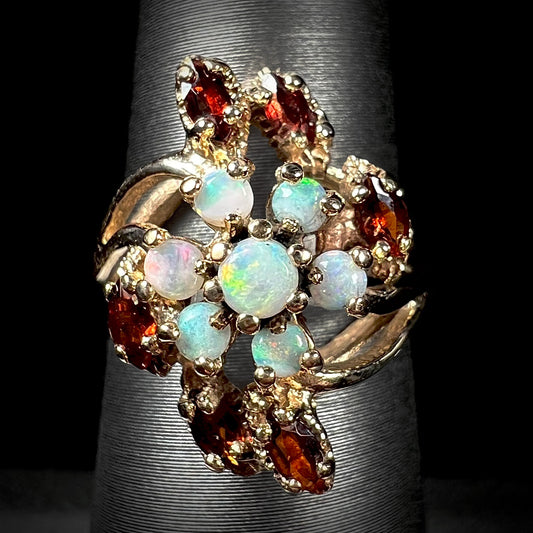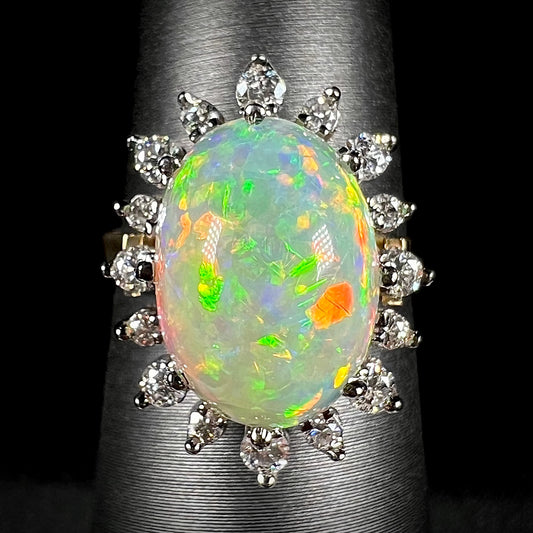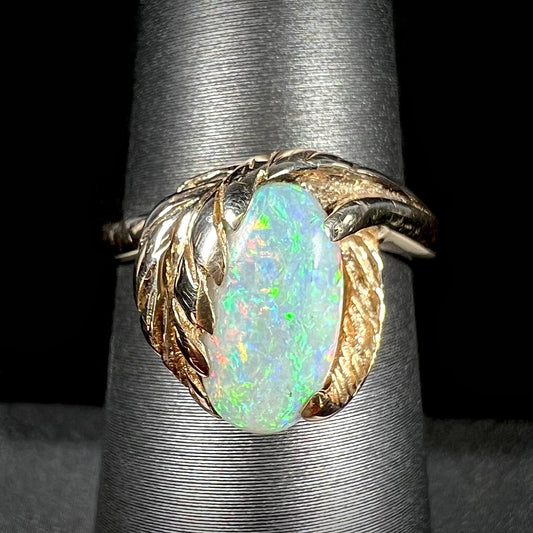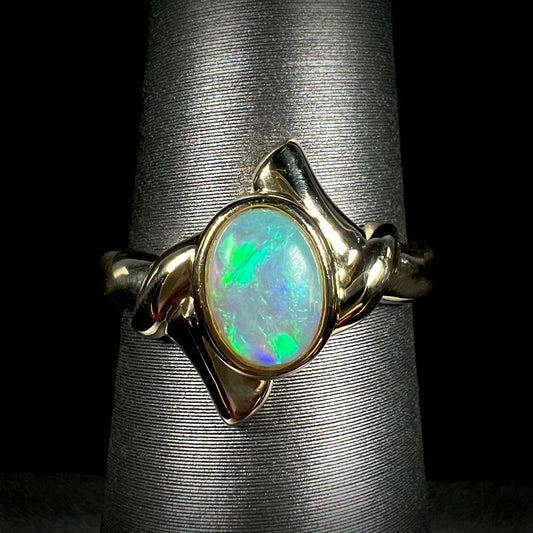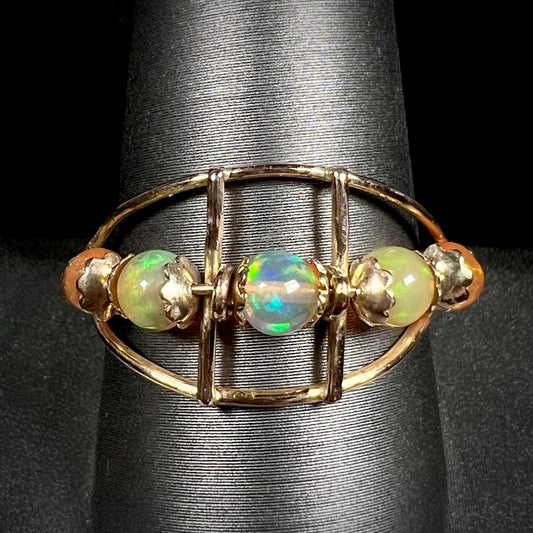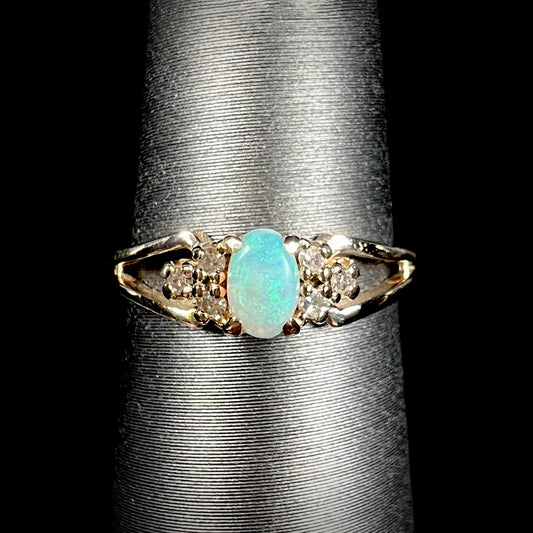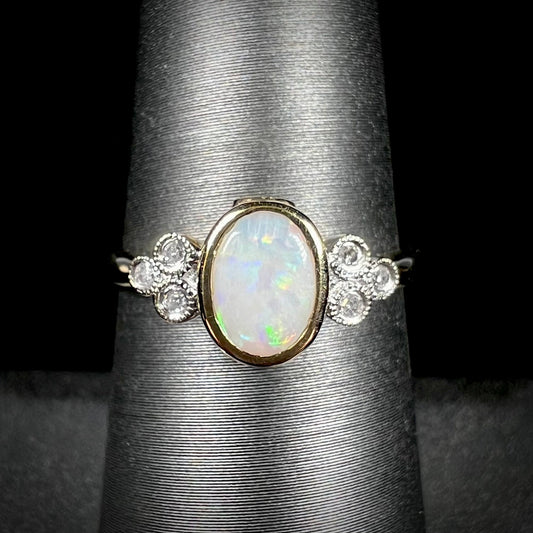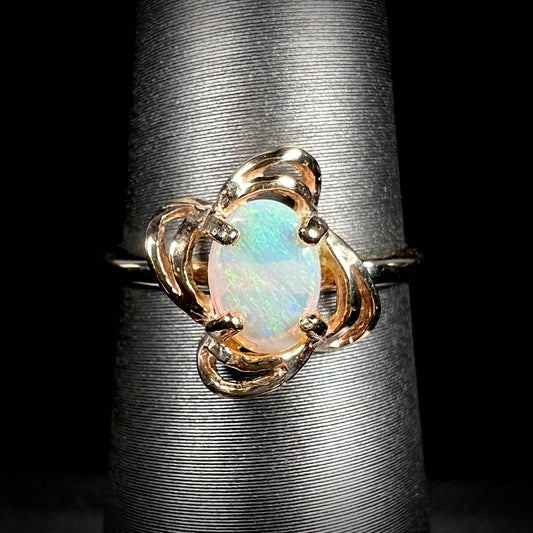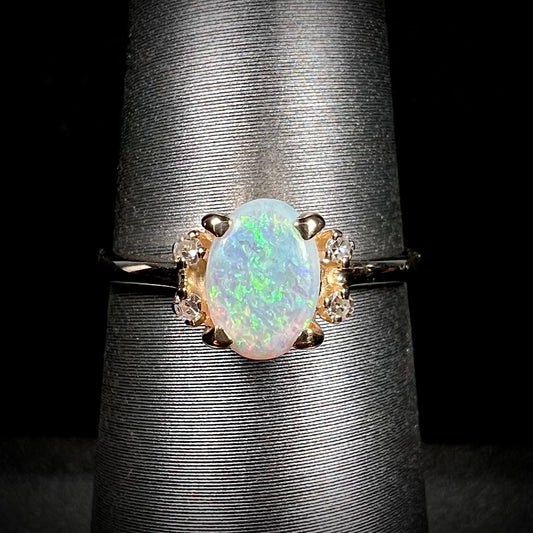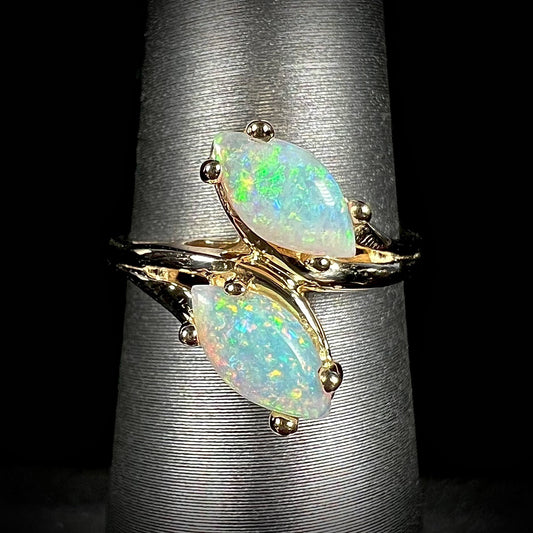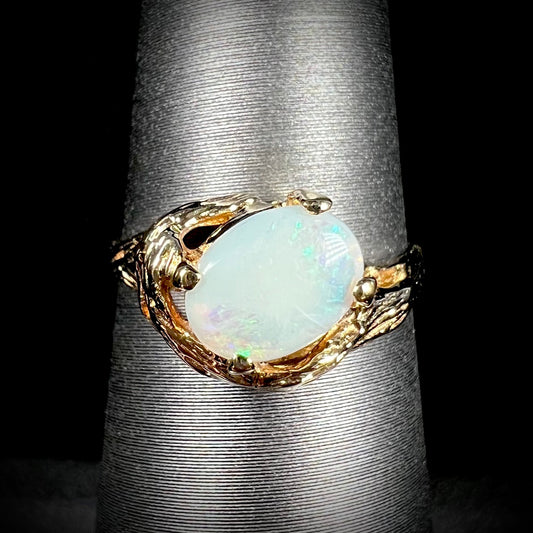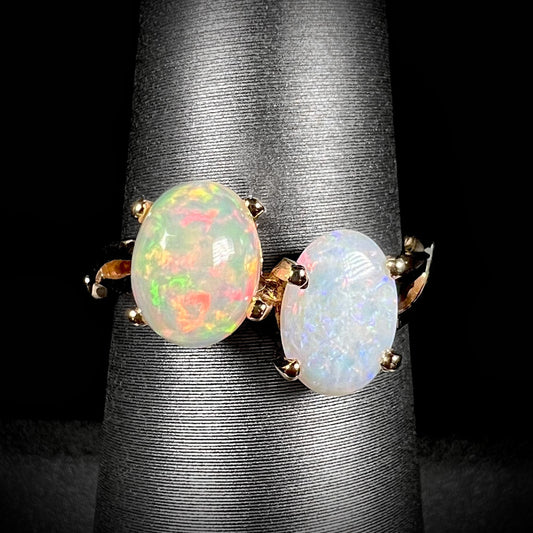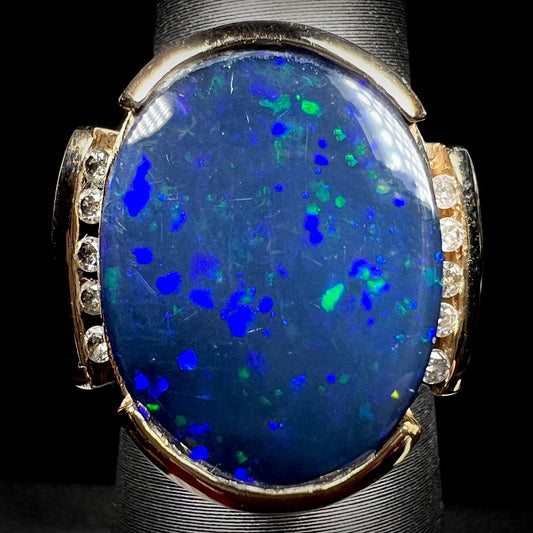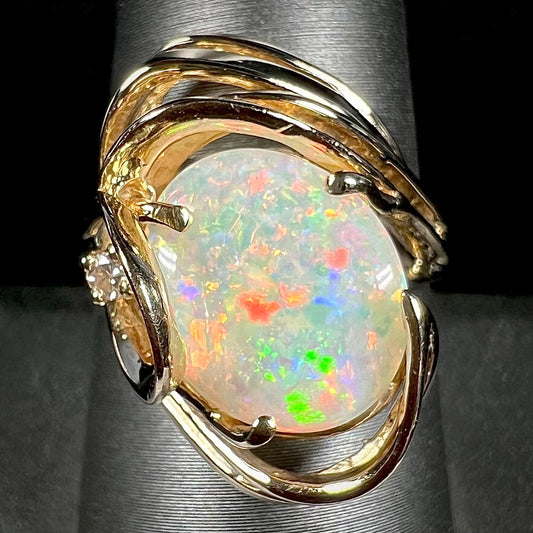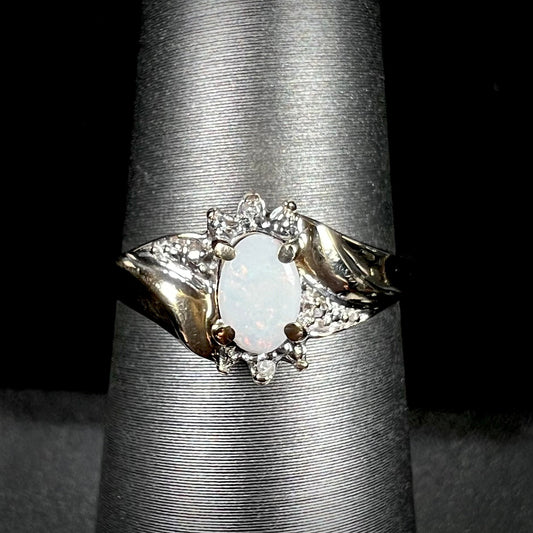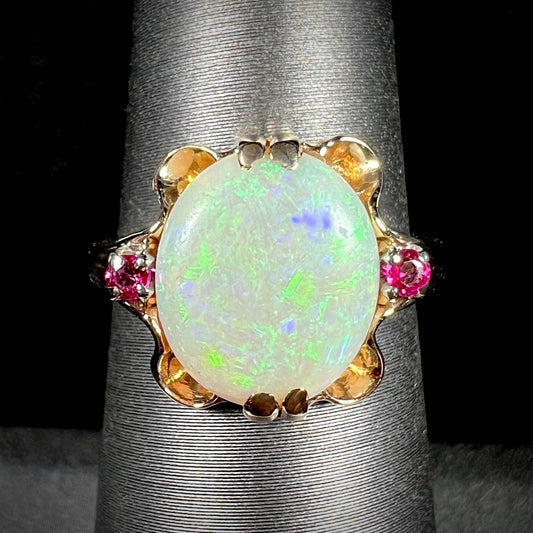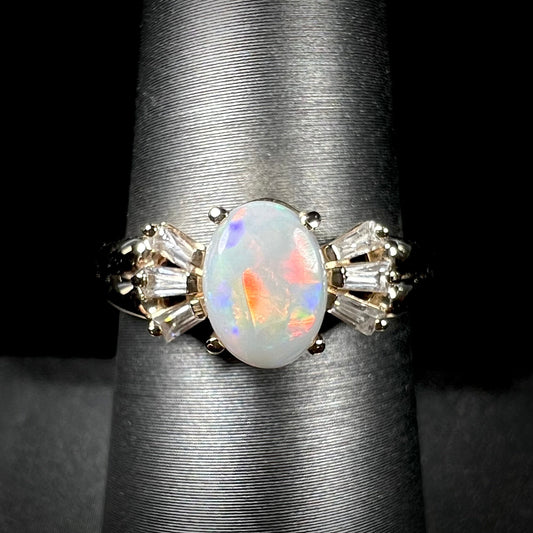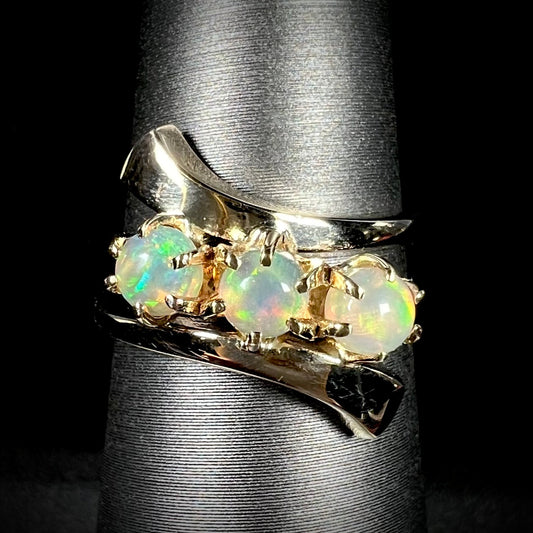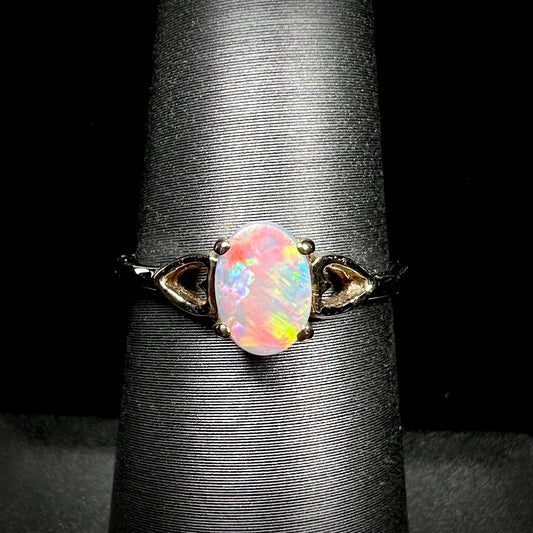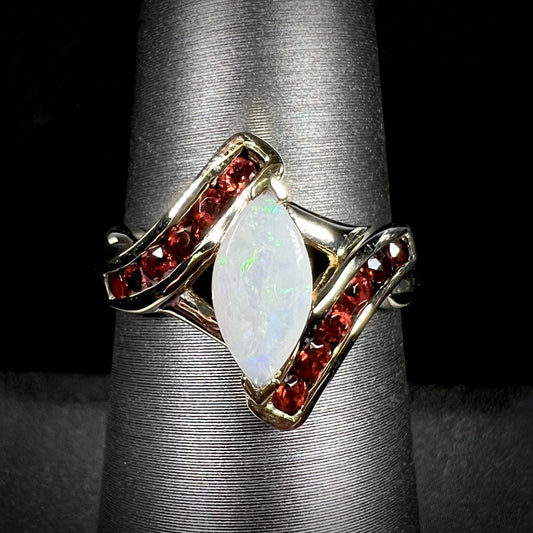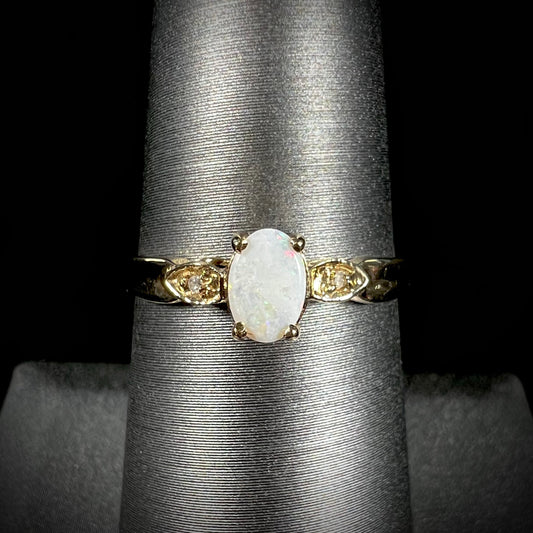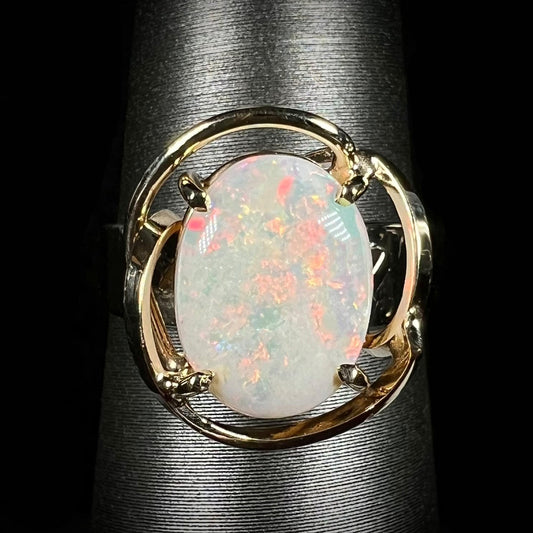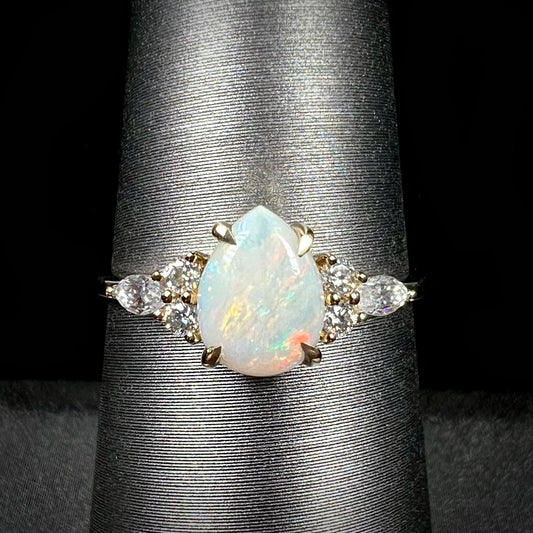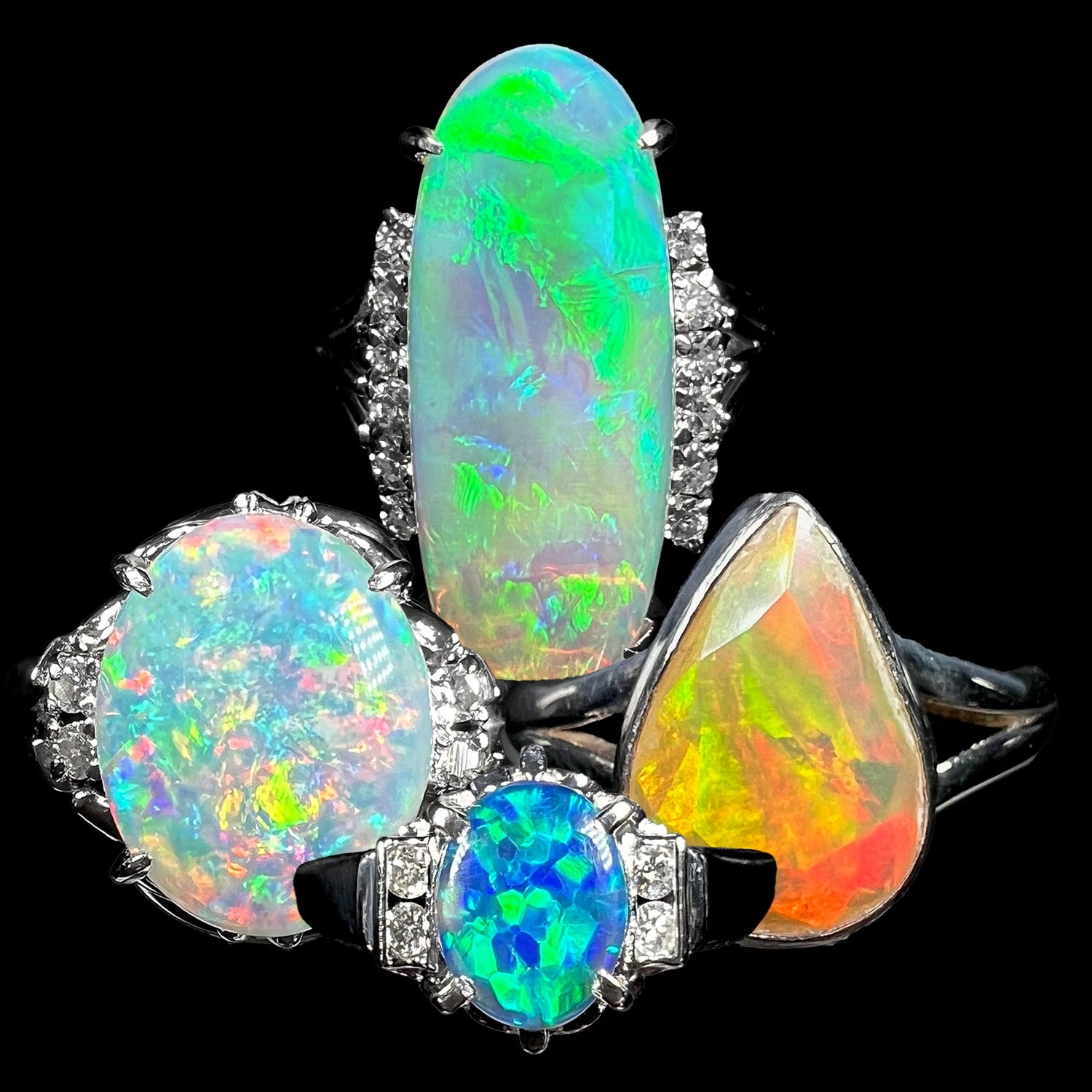
Collection: Gold Opal Rings

One metal.  Many possibilities.

Gold opal rings bring together structure, color, and purity in one of jewelry’s most personal forms.

From the warmth of traditional yellow gold to the modern refinement of white gold, each offers a distinct tone and wear experience.

Explore our Yellow Gold Opal Rings or White Gold Opal Rings collections to narrow your focus by color and style, or browse from the entire selection below.


Gold Opal Rings: A Deeper Look

OpalPop’s collection of solid gold opal rings reflects the full range of what gold can be—across karat purities, alloy colors, eras, and global influences.  Vintage and modern pieces appear side by side, sourced from estates, auction houses, secondary markets, and contemporary independent artists.

If there is one theme this collection makes clear, it is this: gold is not a single metal.  It is a system of choices shaped by history, metallurgy, and intent.

In our broader Gold Opal Jewelry guide, we explore global gold standards, hallmarking laws, international purities, and valuation principles.  Here, the focus narrows to how those variables perform specifically in rings—where durability, wear behavior, servicing realities, and long-term practicality matter most.

Considering Gold Color

For rings, gold color is not a secondary detail—it is central.  Rings are seen constantly by their wearer, making metal color a daily visual presence.

Most buyers already lean strongly toward yellow or white.  For those undecided, two practical considerations typically guide the decision:

  • How the metal contrasts with the wearer’s skin tone
  • How the metal interacts with the opal’s body tone and play-of-color

Because opals can display nearly every color in the visible spectrum, metal pairing has real visual impact.

Yellow Gold Rings

Yellow gold remains the historical standard.  More yellow gold opal rings exist across eras than any other metal color.

Skin tone: Warm, olive, and neutral tones are most naturally complemented.

Opal pairing: Stones with red, orange, and yellow fire appear subtly intensified.  Mexican fire opals and warm-toned Ethiopian opals often pair especially well.

Higher karats produce progressively richer yellow tones. Buyers who prefer keeping metals consistent on the same hand should note that 18k’s deeper yellow can contrast noticeably against lighter 10k or 14k tones.

From a servicing standpoint, yellow gold is the most straightforward metal for sizing and prong work.  It is malleable, widely used, and familiar to most bench jewelers.  While not the hardest alloy, it is predictable and forgiving—qualities that matter in long-term ownership.

White Gold Rings

White gold rose to prominence during the Art Deco era as a platinum alternative and continues to represent a more understated form of luxury.  Because of its high-contrast aesthetic, white gold is frequently used in two-tone designs—such as yellow gold shanks paired with white gold heads to brighten diamonds or frame a center stone.

Skin tone: Cool and neutral tones.

Opal pairing: Strong contrast works beautifully with black opals, dark opals, and stones dominated by blue or green fire.

From a styling standpoint, white gold integrates easily with other white metals such as platinum and sterling silver. Differences between 10k, 14k, and 18k white gold are visually subtle, making mixed-karat stacking far less noticeable than it is with yellow gold.

White gold’s hardness comes from its alloying metals—most commonly nickel.  This increases scratch resistance but introduces brittleness relative to yellow gold.  Improperly fabricated white gold rings may show prong breakage or stress fractures at the base of the shank over time.

Because white gold retains a faint warm undertone, most pieces are rhodium plated to achieve a bright, cool finish.  Rings require replating more frequently than pendants or earrings due to constant friction wear.

Nickel sensitivities are a legitimate consideration.  Hypoallergenic alloys exist but are uncommon in finished commercial rings.

Rose Gold Rings

Rose gold appears in cyclical waves of popularity—most notably in the 1920s, 1940s, and again in the 2010s.  It remains the least common of the three primary colors in opal rings.

Skin tone: Particularly striking on darker complexions; versatile overall, though it can visually blend into very pink undertones.

Opal pairing: White opals with red or pink fire create a traditional vintage aesthetic.  Ethiopian opals often complement rose gold’s warmth.

Rose gold often functions as a visual bridge between yellow and white metals. Its soft copper tone allows it to sit comfortably alongside either, making it one of the easier colors to integrate into mixed-metal hands.

From a structural standpoint, rose gold is hard and resilient due to its copper content.  However, it is technically demanding to service.  Traditional color-matching solders often incorporated cadmium—a heavy metal that releases highly toxic fumes when heated.  Modern cadmium-free solders exist, but they melt at temperatures very close to rose gold’s own melting point.  This creates narrow thermal margins during resizing or prong repair—particularly when heat-sensitive opals are involved.

Servicing rose gold is not impossible—but it requires a skilled bench jeweler comfortable managing alloy behavior and thermal risk.  Not every jeweler is.

Considering Karat Purity

Karat purity affects more than price.  In ring form, it influences:

  • Weight and density
  • Color saturation
  • Scratch resistance
  • Prong longevity
  • Cost of future resizing or repair
  • Psychological perception of “luxury”

Below is how the primary purities perform in rings.

14k Gold Rings — The American Standard

14k gold (58.5% pure gold) represents the traditional U.S. balance point between durability and richness.

Because it is the domestic standard, it supports the broadest stylistic range on the market—from commercial-quality white opals in production mountings to high-end black opal statement pieces.

For most buyers, 14k remains the safest middle ground: durable enough for daily wear, substantial enough to feel meaningful, and widely serviceable by jewelers across the country.

10k Gold Rings — Practical and Durable

10k gold (41.67% pure gold) is the most durable and cost-effective solid gold option commonly encountered in the United States.

  • Prongs wear more slowly
  • Shanks resist bending
  • Sizing larger is marginally less costly due to lower gold content

Because of its higher alloy percentage:

  • Yellow appears lighter
  • Rose appears redder
  • White appears whiter

Many production 10k rings are manufactured in quantity and often paired with white opals, Ethiopian opals, or lab-created opals.  It is the practical buyer’s gold—engineered for resilience and accessibility.

18k Gold Rings — Density and Prestige

18k gold (75% pure gold) is globally recognized as the luxury tier.

  • Noticeably heavier and denser on the hand
  • Richer, more saturated yellow tone
  • Softer and more prone to surface wear
  • Higher resizing costs (as enlarging requires splicing in expensive 75% pure gold material)

Fine Australian black opals and high-grade crystal opals are frequently mounted in 18k settings to signal premium positioning.

While 18k is not fragile, it demands mindfulness.  Its high purity increases malleability, meaning thin shanks or delicate prongs may bend or warp under stress from daily wear.

For buyers who value weight, richness, and tactile presence, 18k delivers a distinct physical experience.

9k Gold Rings — British Influence

9k gold (37.5% pure gold) is not an American standard but appears through UK and Australian imports.

Historically common in Victorian and Edwardian jewelry, many antique examples survive today.  Because of copper-heavy British alloys used during these eras, antique 9k pieces often display a distinctive reddish-brown undertone.

Such rings frequently carry collector value beyond intrinsic gold content.

Modern 9k rings are still produced overseas as budget options, so not every 9k example is antique.

Engagement Ring Considerations

Gold choice matters more when the ring is worn daily—especially when selecting an opal engagement ring, where color, karat purity, and structural design carry long-term consequences.

The Golden Rule

Opals should be treated like glass.

Bezel settings provide the greatest protection. High-set prong styles increase impact risk. Higher-karat golds—particularly 18k—combined with thin prongs increase the likelihood of deformation if snagged.

Structure matters.

Determine Your Priorities

Color comes first.

Metal color mismatch is one of the most common points of dissatisfaction in surprise engagements.  Preference should be discussed directly.

Budget defines tier.

10k maximizes durability and cost efficiency.

14k balances longevity and presence.

18k prioritizes weight and prestige.

Lifestyle matters.

Highly active hands favor 10k or 14k.

White gold offers the hardest alloy profile.

Those disciplined about removing rings during work have greater flexibility.

For buyers capable of consistent care, durability becomes secondary to design, opal quality, and aesthetic alignment.

Choose the Gold Ring Perfect for You

Gold opal rings are not interchangeable.

Color, purity, alloy composition, era, fabrication quality, and servicing realities all shape how a ring behaves over time.

Understanding those variables allows you to select deliberately—rather than simply choosing by appearance alone.

Dig Deeper

Explore more curated collections similar to Gold Opal Rings: