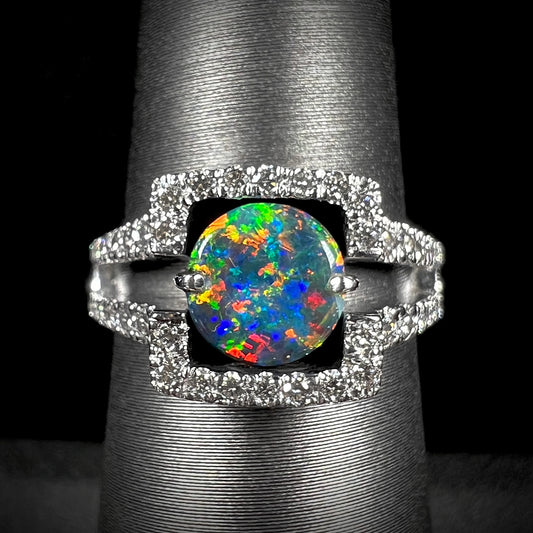
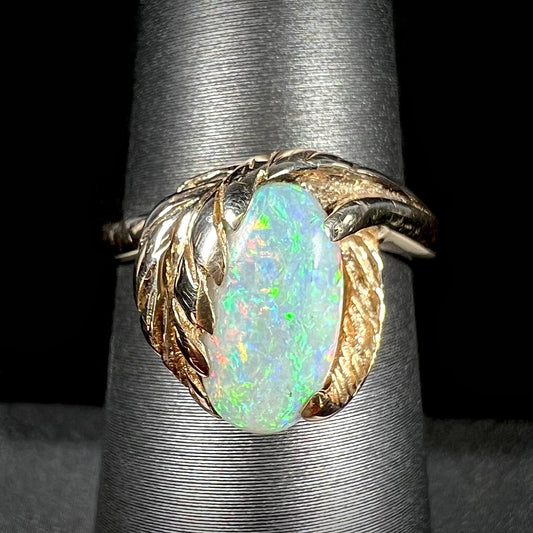
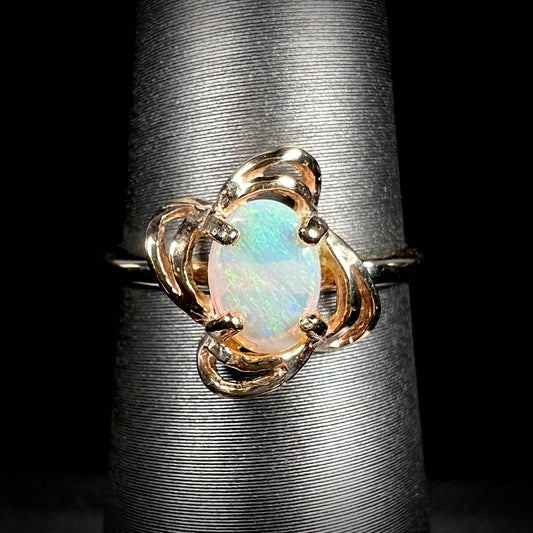
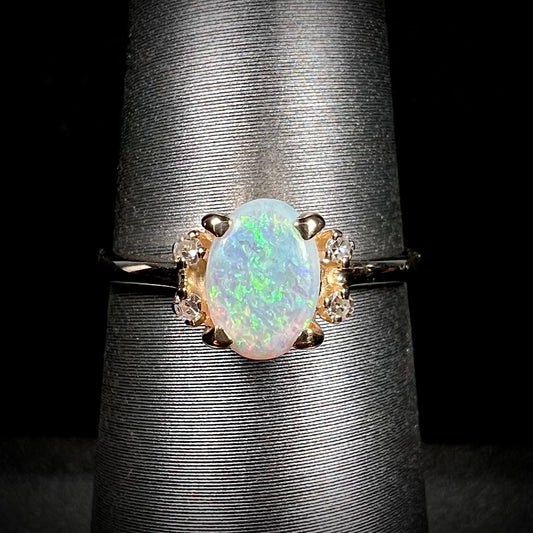
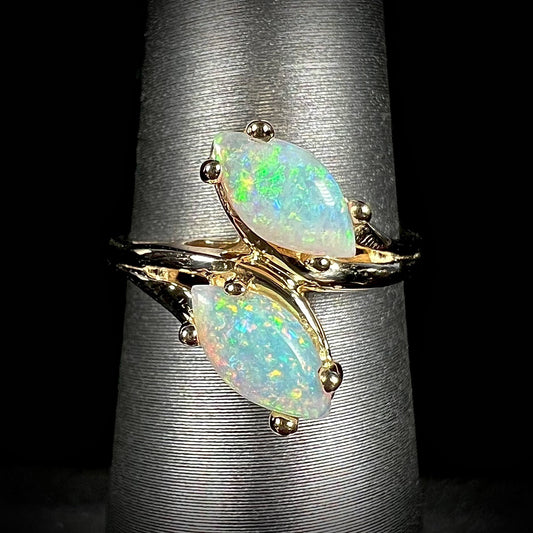
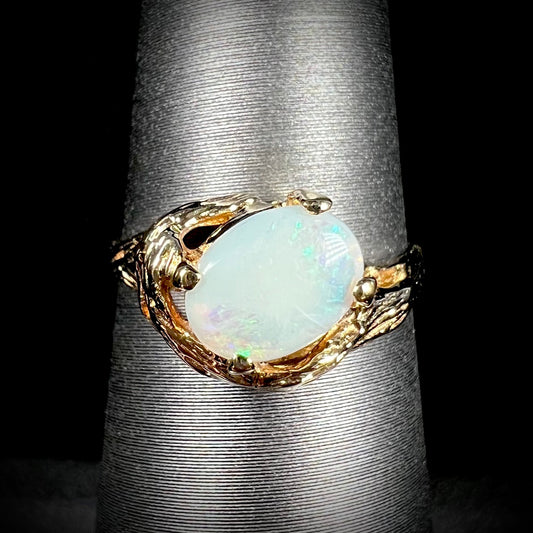
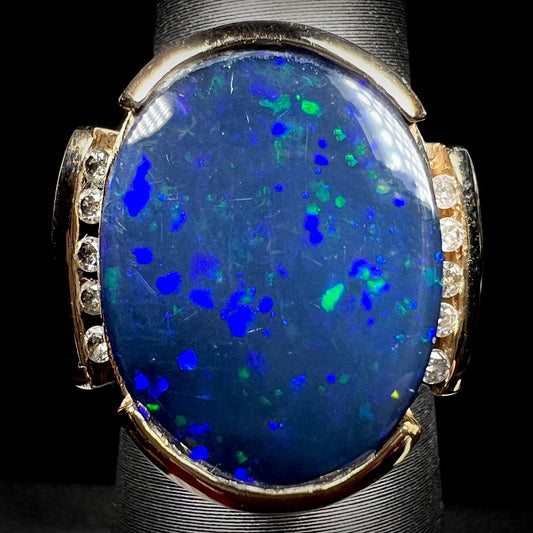
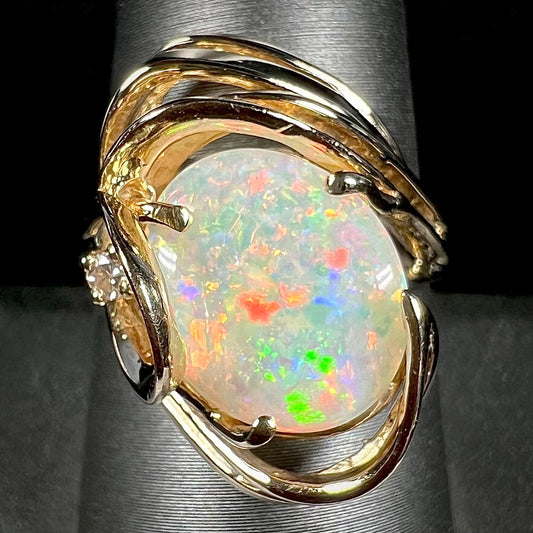
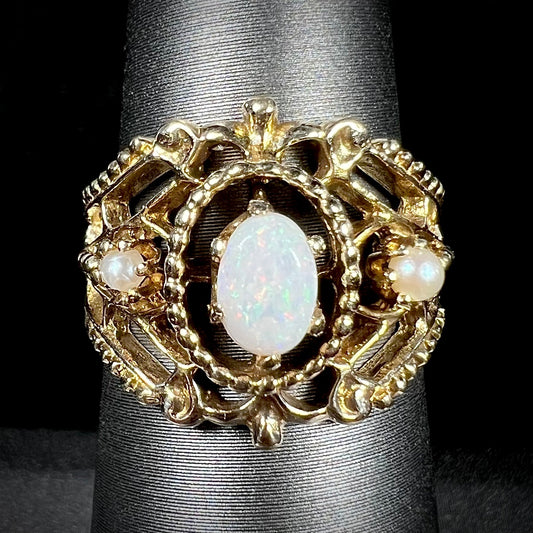
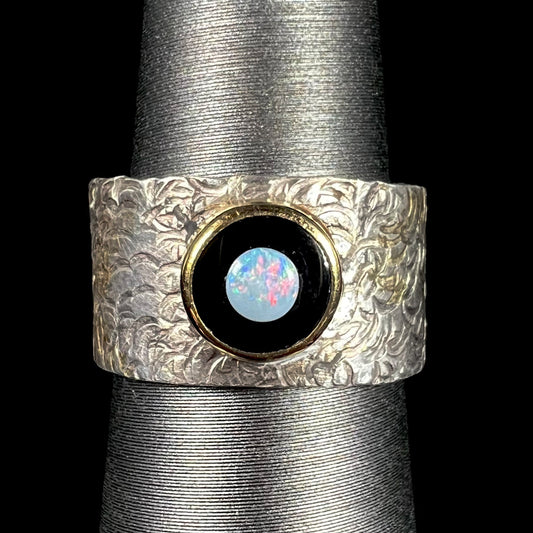
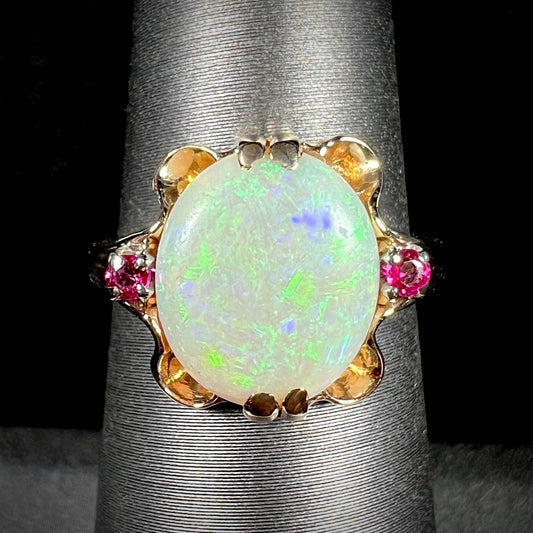
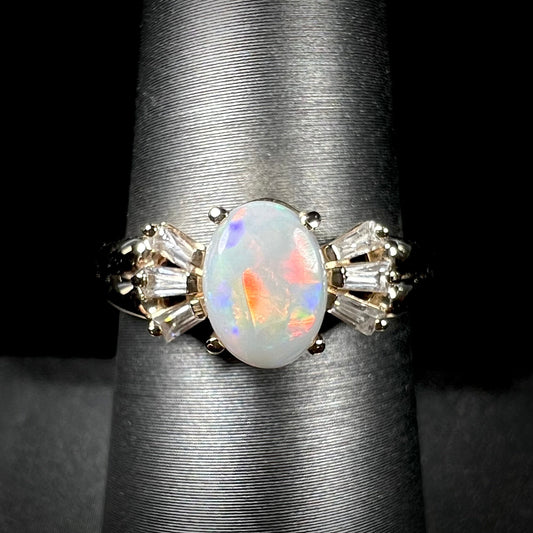
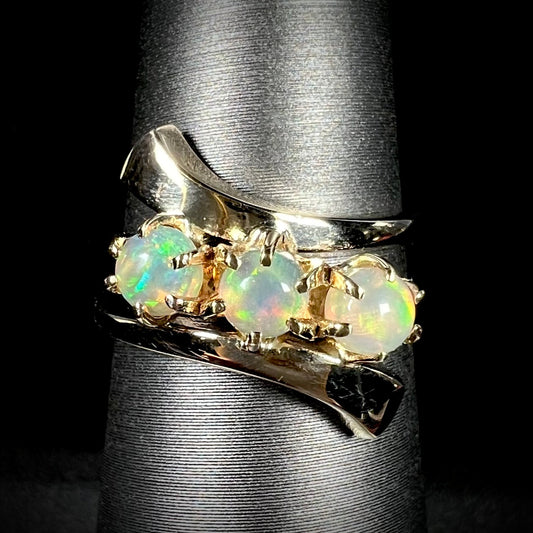
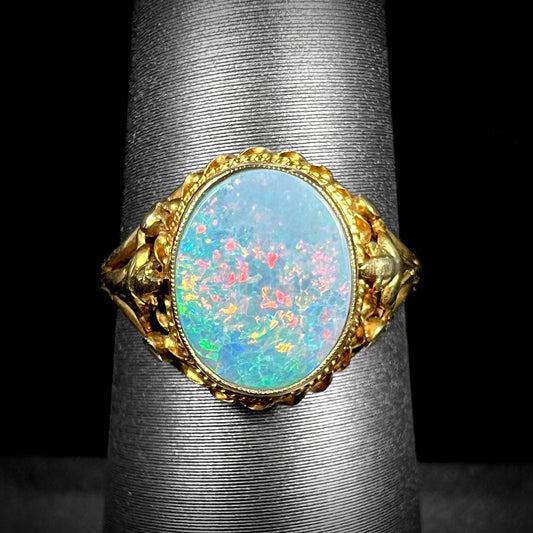
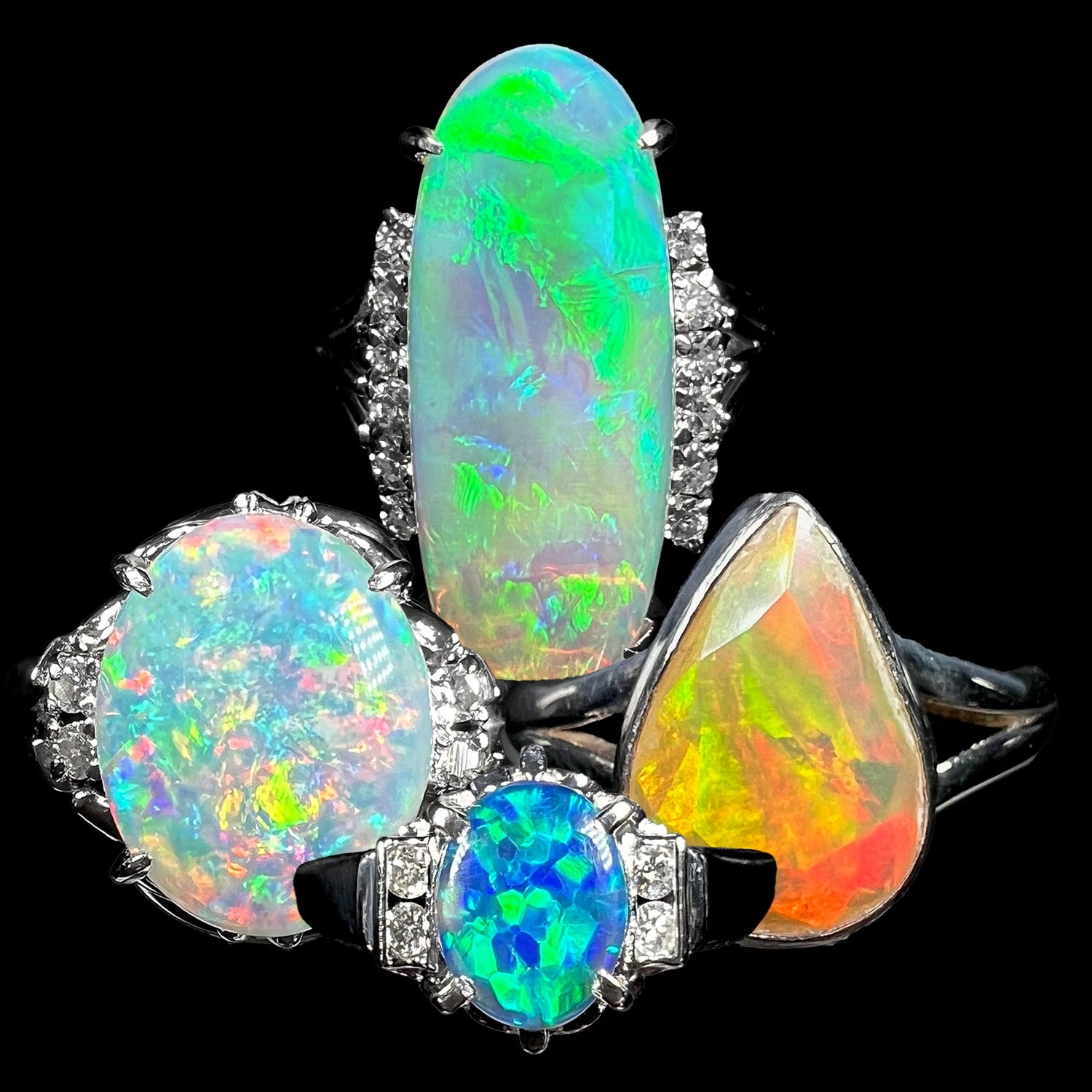
OpalPop’s collection of 14k gold opal rings features pieces crafted primarily for the American market in yellow, white, and occasionally rose gold. Both vintage and modern designs are represented, set with opals ranging from entirely natural stones to lab-created and assembled doublets and triplets. Styles span from one-of-a-kind works by independent artists to mass-produced designs, with modern pieces typically manufactured overseas and select vintage rings originating from the golden era of American jewelry production.
Gold-plated and gold-filled rings are intentionally excluded, allowing buyers seeking solid 14k gold to browse without distraction. Occasionally, sterling silver rings with solid 14k gold accents or mixed-karat designs appear; these are always clearly identified in product titles and descriptions.
In our broader Gold Opal Rings guide, we explain that “gold” is not a single choice, but a spectrum of considerations spanning color, karat purity, and wear characteristics. In our 14k Gold Opal Jewelry collection, we define what makes 14k the American standard. Here, the focus narrows to 14k gold opal rings—how they wear, what durability factors matter, the styles most commonly encountered, and key considerations for engagement ring buyers.
The Durability of 14k Gold Opal Rings
Durability is a primary consideration when selecting any opal ring. Rings experience more contact than any other jewelry type—daily interactions with surfaces, objects, and movement all contribute to wear over time. Both the metal and the gemstone must be considered separately.
Mindful Care is Required for Any Opal Ring
Opals are widely considered delicate gemstones. At OpalPop, we recommend treating every opal ring as though it were mounted with glass—avoiding sharp impacts and abrasive surfaces.
Bezel settings, which fully surround the stone, offer the most protection. Prong settings, while visually lighter, leave the edges of the opal exposed and more vulnerable.
Certain opal types require additional care. Ethiopian opals and assembled stones should not be exposed to moisture; rings set with these materials should be removed before washing hands or applying products. Other opal types can tolerate water, but chemical exposure should still be avoided.
Because 14k gold is so widely used, it houses the full spectrum of opal qualities—from readily replaceable stones to rare, high-value material. This matters. Replacing a lost Ethiopian or lab-created opal is far simpler than replacing a fine black or boulder opal. Buyers should factor this into how they intend to wear the ring.
14k Gold: The Balance of Durability and Purity
Gold purity directly impacts how a ring wears.
Higher purities like 18k gold rings offer richer color and higher intrinsic value but are softer, making them more prone to scratching, denting, and long-term deformation—particularly in prongs and thin shanks.
Lower purities like 10k gold rings are harder and more resistant to surface wear but can appear noticeably paler, sometimes approaching a silvery tone in certain alloys.
14k sits between these extremes. 14k yellow gold rings maintain a clear, warm tone while offering meaningful resistance to wear in critical structural areas like prongs and shanks. Designs—especially thinner or more delicate ones—tend to hold their shape reliably over time.
While not as hard as 10k, 14k’s slightly increased malleability provides an advantage: it absorbs impact better. When combined with protective settings such as bezels, this balance makes 14k particularly well-suited for opal rings.
Sizing 14k Gold Opal Rings
Because 14k gold is widely used, most jewelers can size these rings without difficulty. The critical factor is not the gold—it is the opal.
Opals are heat-sensitive. Traditional torch sizing may require removing the stone, which introduces risk if handled by an inexperienced jeweler. Modern laser soldering can reduce this risk, but not all jewelers have access to this technology.
Certain designs—particularly opal inlay rings—are especially sensitive and often should not be resized at all. When possible, it is best to ensure proper sizing before purchase.
Popular Styles of 14k Gold Opal Rings
Because 14k is the most widely used gold purity in the United States, it supports the broadest range of styles. While the possibilities are effectively limitless, most fall into two general categories.
One-of-a-Kind Custom and Handmade Rings
Custom and handmade rings have always been a part of the jewelry industry. In the United States, 14k has historically been the preferred metal for independent jewelers—offering a workable balance of cost, durability, and visual appeal.
During the 1980s and 1990s, imports of high-grade Australian opal surged into the US market. Many jewelers became deeply involved with the material itself, sourcing and cutting stones in addition to setting them. This led to a generation of makers who understood how opals should be handled and protected.
Vintage opal rings from this era often reflect lingering Modernist influences—featuring asymmetry, geometric balance, and thoughtful stone placement. Opals were typically set low, frequently in bezel settings. Yellow gold dominated the 1980s, while 14k white gold opal rings rose sharply in the 1990s.
Today, handmade 14k opal rings continue to be produced, though designs have evolved. Rising gold costs have led to lighter constructions, and increasingly scarce Australian material has encouraged the use of freeform cuts that preserve natural color play—often resulting in more organic, asymmetrical designs.
Commercially-Produced Opal Rings
Mass production became widespread in the 1980s as manufacturing shifted overseas. This allowed for significantly lower costs and broader distribution, a trend that continues today.
Commercial designs tend to share common traits:
- lightweight construction
- uniform stones
- adaptable prong settings
- production in 10k or 14k gold (with occasional 18k options)
In earlier decades, Australian white opals and lab-created stones were commonly used due to their consistency. After 2008, Ethiopian opals became dominant in production jewelry.
The 2010s saw a rise in 14k rose gold rings, often paired with Ethiopian opals. As consumer preferences shifted away from ultra-lightweight pieces, manufacturers began increasing gold weight in response.
Before overseas production, American mass manufacturing was prominent—particularly during the Mid-Century era (1940s–1960s). Many opal rings made in the United States from this period feature 14k gold and are recognizable for their tall cluster designs and post-war atomic-inspired motifs.
Do 14k Gold Opal Rings Make Good Engagement Rings?
Yes—14k gold is one of the most suitable choices for an opal engagement ring, primarily due to its balance of durability, cost, and design availability.
Two considerations are critical.
First, the wearer must understand the durability limitations of opal, as outlined earlier. These are not everyday, impact-resistant stones and should be treated accordingly.
Second, metal color preference matters. Whether yellow, white, or rose gold, this choice is deeply personal—and often more important to long-term satisfaction than the specific design or opal itself.