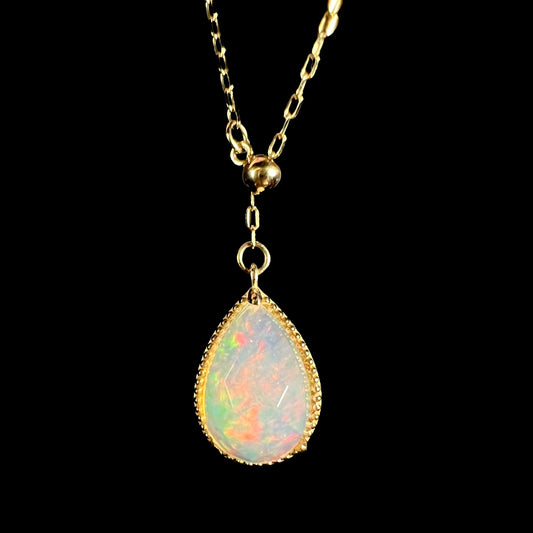
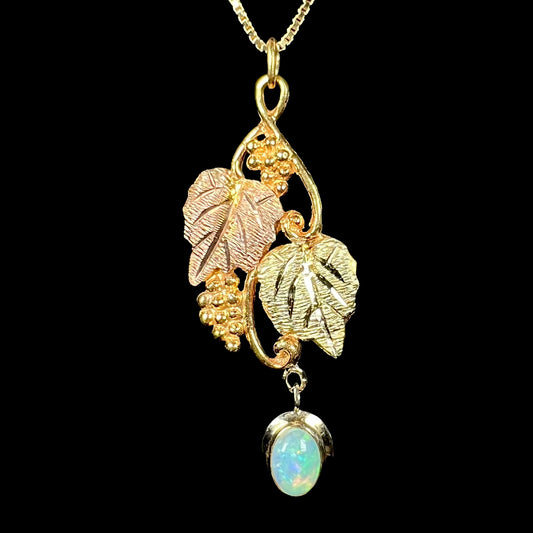
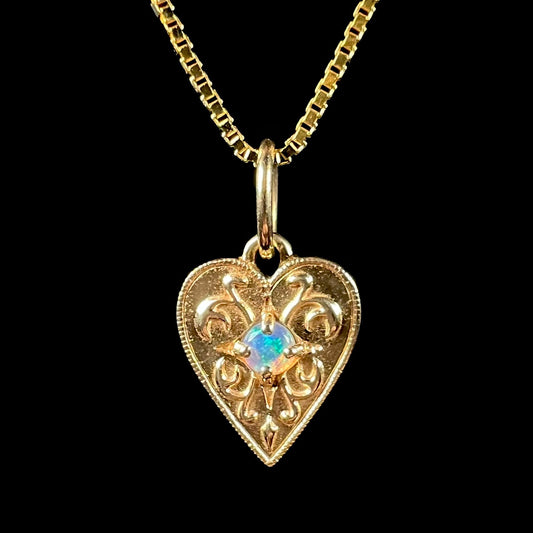
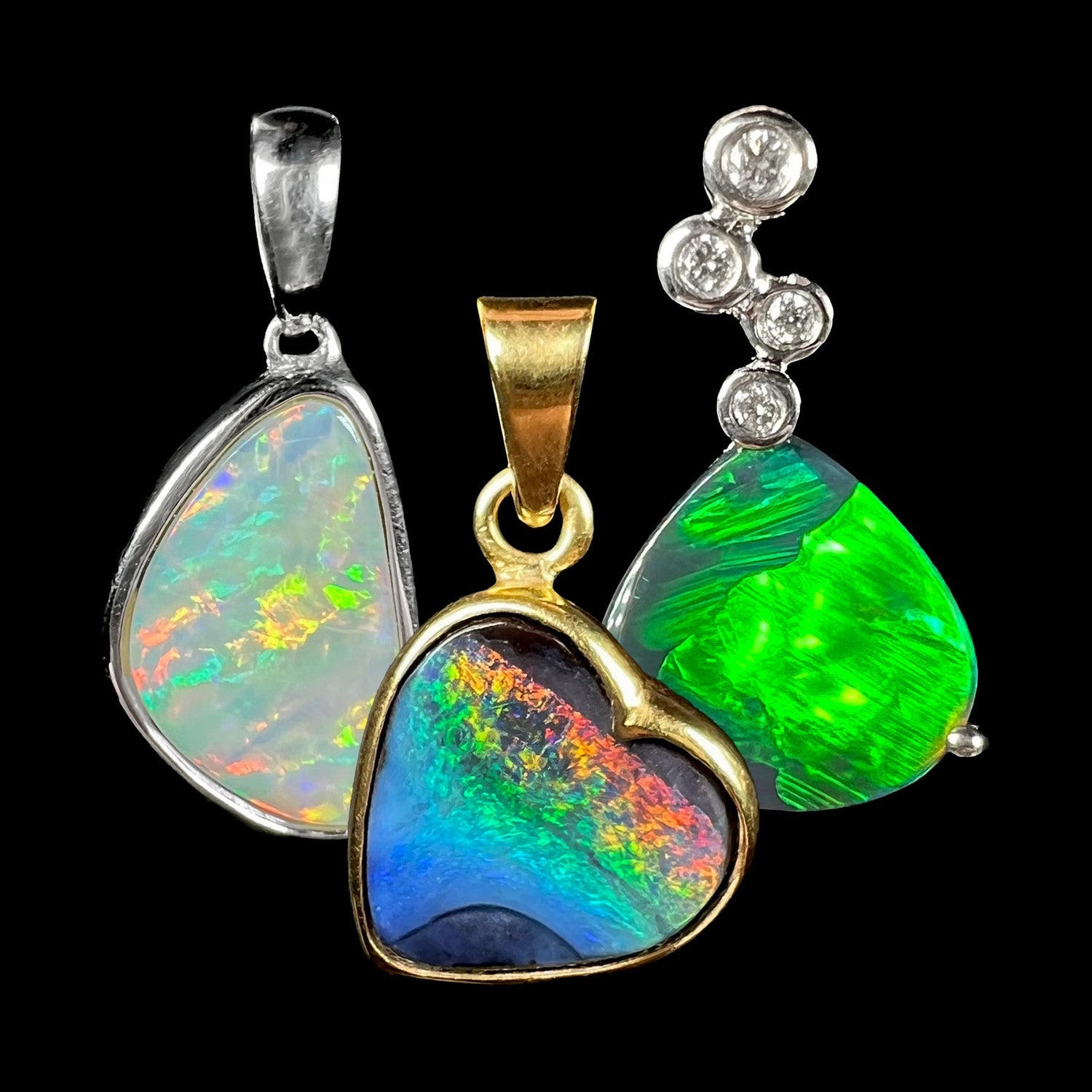
OpalPop’s selection of 10k gold opal necklaces features pendants incorporating some element of solid 10k gold—whether crafted entirely from 10k gold, mixed karat purities, or mixed-metal designs. Gold-plated and gold-filled pendants are intentionally excluded so buyers seeking genuine solid gold can browse with confidence. Both natural and lab-created opals make their appearance throughout the collection.
Every OpalPop pendant includes a complimentary presentation chain. Most presentation chains are gold-plated sterling silver, though select pieces include matching 10k gold chains or cords. Specific chain details are always documented within each product description.
In our master Gold Opal Necklaces collection, we look broadly at gold as a jewelry material, discussing the wide range of available colors and karat purities. In our 10k Gold Opal Jewelry guide, we focus more specifically on the durability and affordability that give 10k gold its reputation as the practical American buyer’s choice. Here, the focus narrows further to 10k gold opal necklaces: how they wear over time, durability considerations specific to chains and pendants, and the manufacturing trends most associated with the category.
10k Gold Opal Necklaces: Strength, Affordability & Commercial Design
10k gold has long been associated with practicality in the American jewelry market due to its lower gold purity and higher alloy content. This combination produces jewelry that is lighter, harder, and generally less costly than higher-karat alternatives.
Chains and pendants both benefit from this added strength. Thin chains are often able to support heavier pendants more reliably than equivalent 14k gold necklaces, while designers are able to manufacture larger-looking styles using less overall gold.
These advantages made 10k gold especially attractive to large American jewelry companies producing fashion-forward pendant designs for budget-conscious buyers seeking genuine solid gold jewelry at accessible price points.
Caring for 10k Gold Chains & Clasps
Though 10k gold is more durable than higher-karat alloys, thin chains should still be treated carefully. Lightweight chains should generally be removed before sleeping or showering, as both activities place unnecessary stress on delicate links.
After removing a necklace, it is good practice to clasp the chain closed before setting it down. This helps reduce the risk of knotting, particularly with thinner chains.
Most lightweight 10k gold chains utilize spring ring “C” clasps rather than lobster clasps. While functional and historically very common, spring clasps are generally less durable long-term.
A simple way to assess clasp condition is to open the clasp normally, then allow it to snap shut automatically:
- A healthy clasp closes quickly with a crisp click.
- A slow or “mushy” closure may indicate dirt buildup or spring wear.
Dirty clasps can often be cleaned gently using mild hand soap, warm water, and a soft toothbrush. If performance does not improve afterward, the necklace should be worn more carefully until inspected by a jeweler.
Caring for 10k Gold Opal Pendants
Most modern 10k gold opal pendants are mounted with Ethiopian opals. These—as well as opal doublets and triplets—should not be exposed to water or chemicals. This includes perfumes, colognes, hairsprays, lotions, and jewelry cleaners.
One of the most important areas to monitor on any pendant is the bail, the section where the chain passes through the pendant itself. Over time, chains gradually wear away the bail like a saw, creating visible grooves or notches along the edges. Fortunately, 10k gold wears relatively slowly compared to higher-karat alloys, making this process less aggressive.
Mixing metals and karat purities can also affect wear rates:
- Harder 10k pendants wear softer sterling silver, 14k, and 18k chains faster.
- Harder 10k chains wear softer bails faster.
- Very hard base metals such as stainless steel can accelerate wear significantly and are generally not ideal for long-term use with 10k gold pendants.
Surface Patina & Skin Reactions of 10k Gold Necklaces
Because many 10k gold alloys contain high copper content—particularly older alloys—10k yellow gold necklaces and 10k rose gold necklaces can gradually develop a darker brownish surface patina over time, similar to the tarnish of sterling silver. Some collectors appreciate this aged appearance, especially on vintage necklaces, while others prefer restoring the original shine.
Liquid jewelry cleaners can often remove this surface oxidation. Chains can generally be dipped directly into cleaner and rinsed afterward. Pendants require more caution:
- Avoid exposing opals directly to harsh chemicals.
- Ethiopian opals, doublets, and triplets should also be kept away from water.
Some high-copper 10k chains can additionally leave faint green discoloration on certain wearers’ skin. This harmless chemical reaction depends largely on skin acidity and alloy composition and does not indicate that the chain is fake or improperly represented.
Skin Sensitivities to 10k White Gold Chains
Most 10k white gold necklaces are alloyed with nickel. Some wearers are sensitive to nickel and may experience itching, irritation, or rashes during prolonged wear.
Because 10k white gold contains a relatively high percentage of alloying metals, nickel sensitivity tends to be more noticeable in 10k than in higher-karat white gold alloys. Buyers with known nickel sensitivities should take this into consideration before purchasing white gold chains.
White gold pendants themselves can often still be worn comfortably on sterling silver chains when separated from direct skin contact with clothing.
Design & Manufacturing Trends of 10k Gold Opal Pendants
American 10k Gold Opal Pendants
While custom jewelry allows for endless stylistic variation, most 10k gold opal pendants are commercially produced in quantity by large design houses prioritizing affordability and broad consumer appeal.
These pendants are typically:
- lightweight,
- fashion-oriented,
- and designed around calibrated commercial stones.
Many are sold as complete necklace sets paired with lightweight chains, offering buyers real gold jewelry set with genuine gemstones at accessible price points.
As gold prices have continued rising, solid 10k gold is increasingly used as an accent alongside sterling silver pendants rather than as the sole metal throughout an entire design.
Opal choices within mass-produced 10k jewelry have shifted over time:
- 1980s and 1990s designs frequently utilized Australian white opals with softer play-of-color.
- Lab-created opals were often chosen where bright, uniform color was desired.
- Following major African discoveries beginning in 2008, Ethiopian opals became increasingly dominant within commercially-produced 10k gold jewelry.
Japanese 10k Gold Opal Necklaces
Though 10k gold jewelry has historically been associated more strongly with the American market—while 9k gold necklaces remained the preferred low-karat option throughout Europe and Australia—10k gold has become increasingly popular in Japan since the late 1990s.
Historically, Japanese jewelry culture favored high-purity metals such as platinum and 18k gold. Changing economic conditions and modern fashion trends, however, led younger buyers toward more affordable 10k designs.
Many modern Japanese pendant designs combine delicate construction with manufacturing details more difficult to execute at scale, including:
- faceted Ethiopian opals,
- small but high-grade Australian crystal opals,
- and adjustable chain systems.
Japanese 10k jewelry can often be identified by its hallmark format: “K10,” with the “K” placed before the purity number rather than after it.
Most Common 10k Gold Clasps
Spring Ring Clasps
Spring ring clasps—often called “C” clasps—are the most common clasp style found on lightweight 10k gold chains and have been widely used since the early 1900s.
Their smaller size and lighter weight help keep the clasp positioned behind the neck rather than falling forward beside the pendant. They are also less costly to manufacture than lobster clasps.
It is important to note that most spring ring clasps contain magnetic base-metal springs internally. While magnetism is often associated with fake jewelry, this is completely normal in clasp construction and does not indicate that the chain itself is not solid gold.
Lobster Clasps
Lobster clasps operate similarly to spring ring clasps but utilize a larger, heavier mechanism with a more durable internal spring system.
Because of their added weight and reliability, lobster clasps are generally favored for heavier 10k chains. On extremely lightweight chains, however, their additional weight can sometimes cause the clasp to rotate forward and rest visibly near the pendant instead of remaining behind the neck.