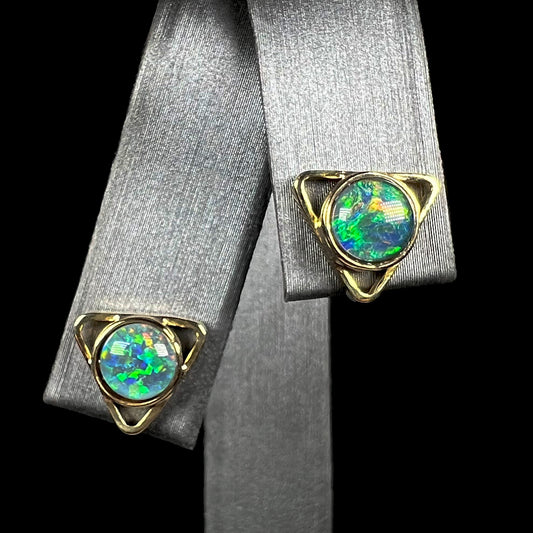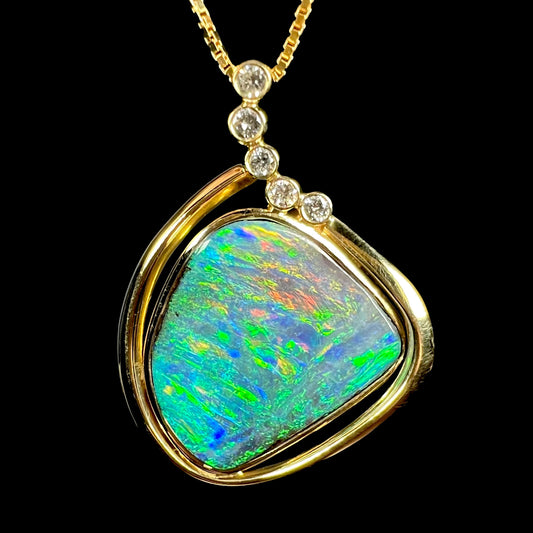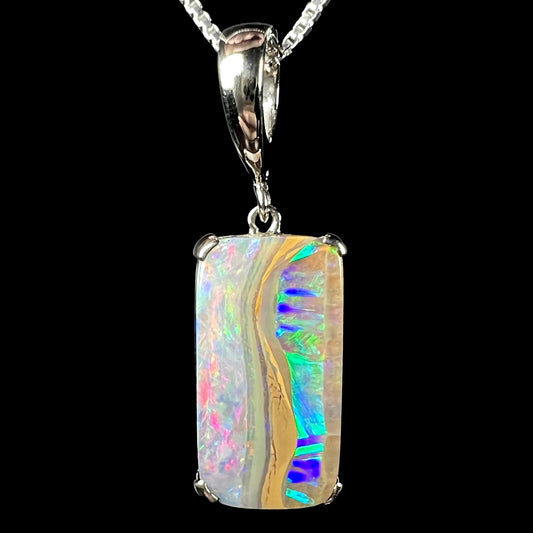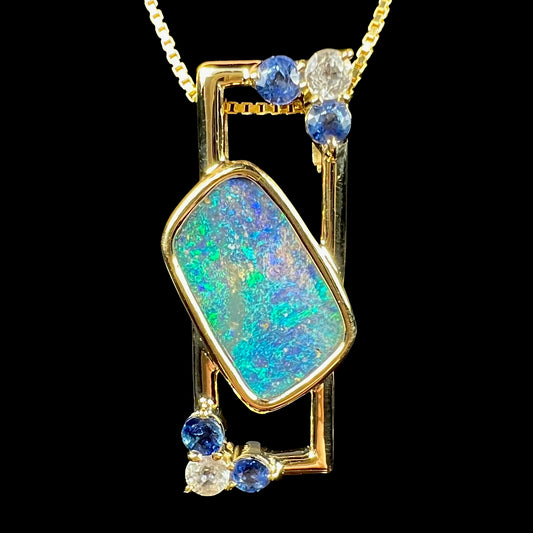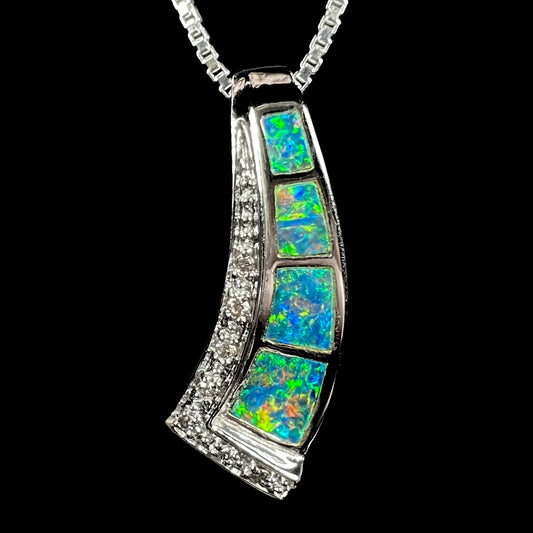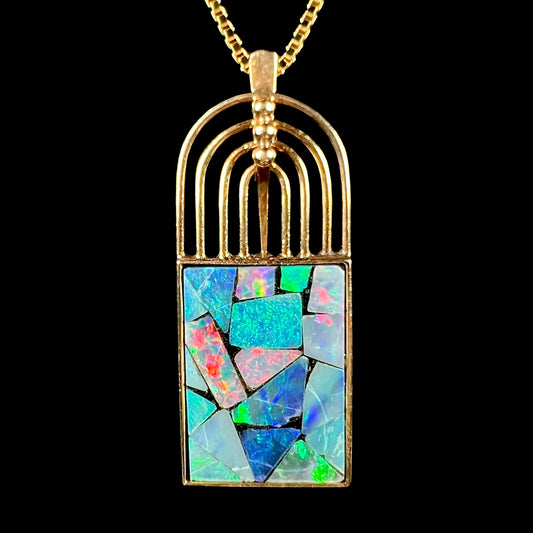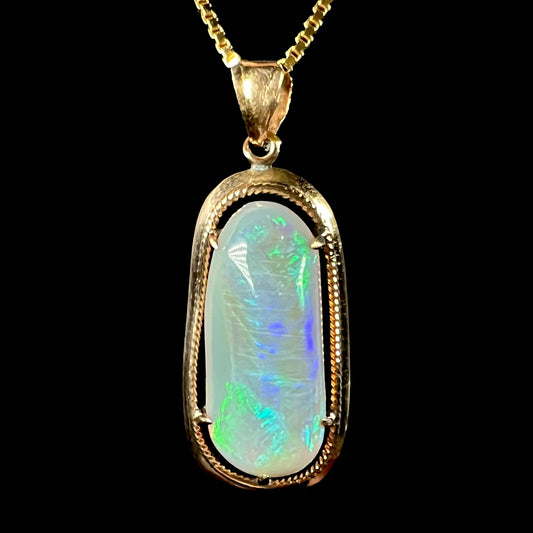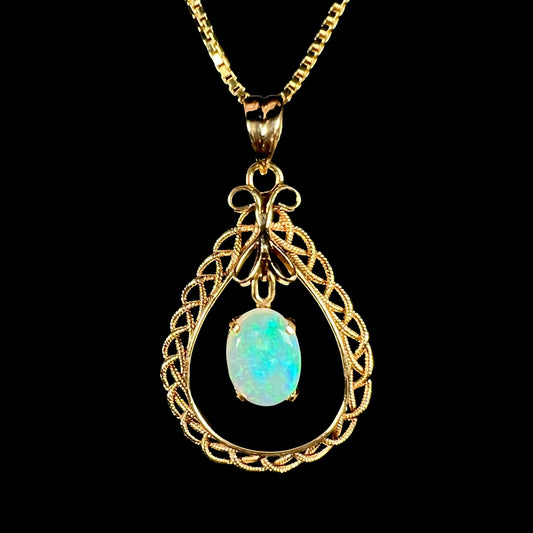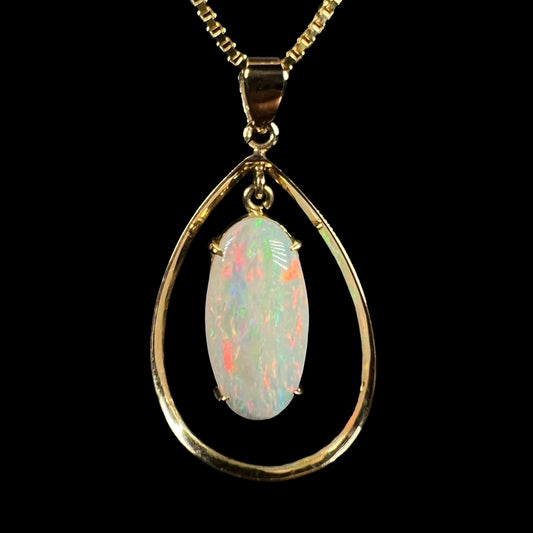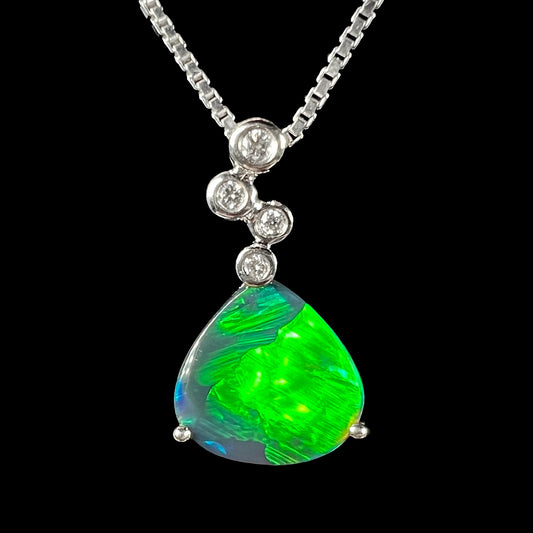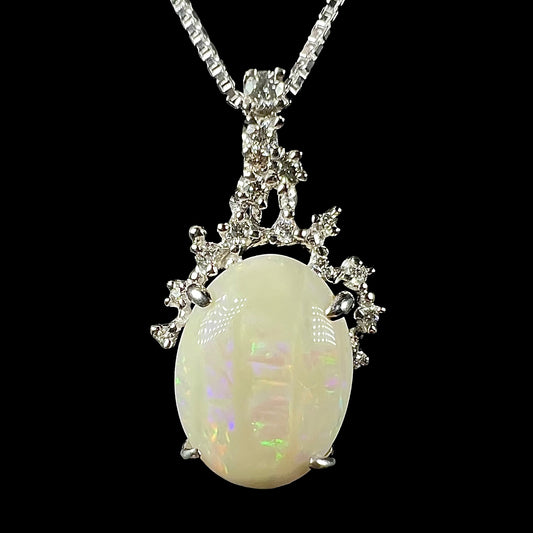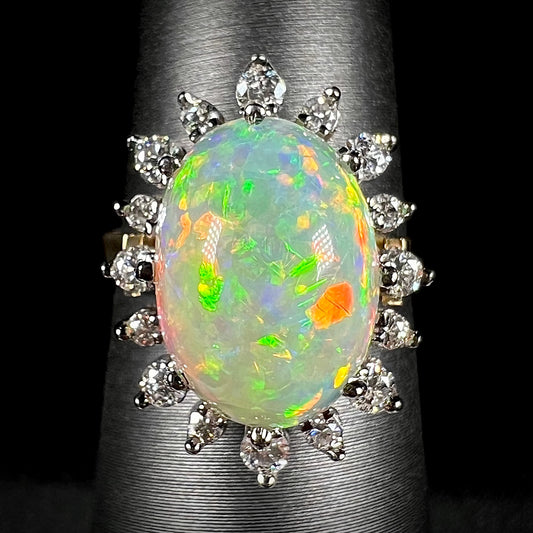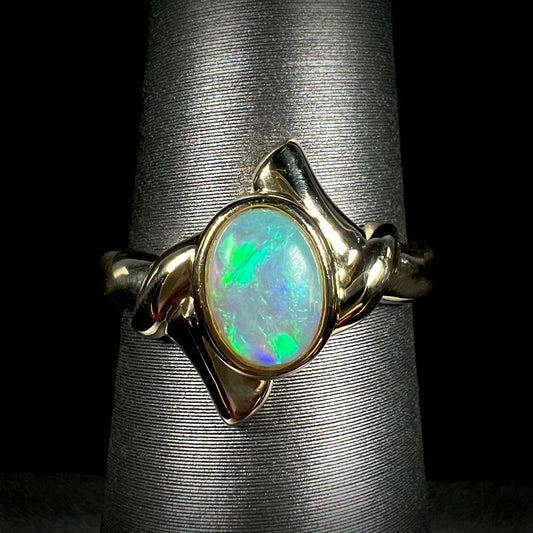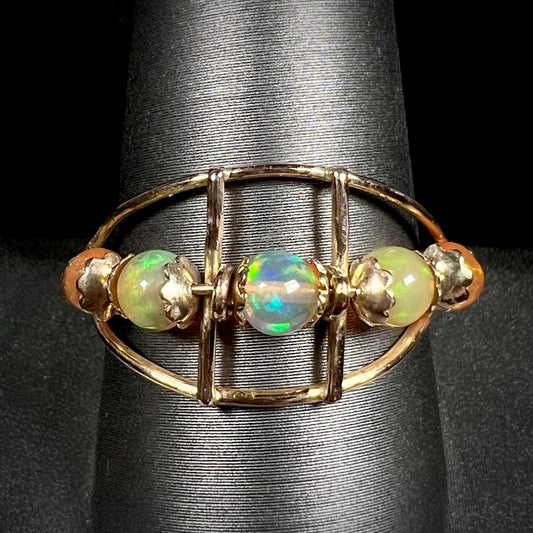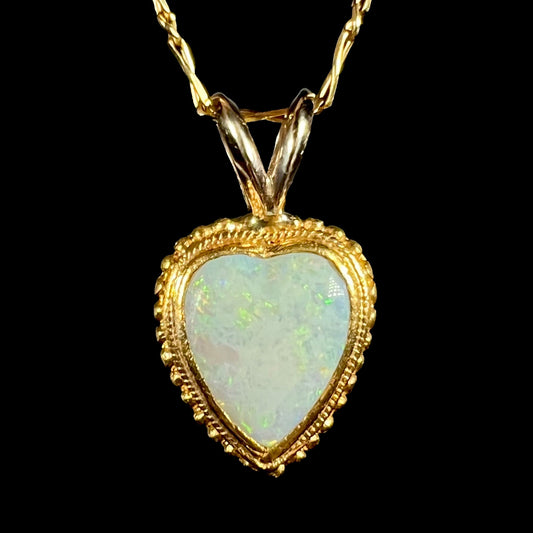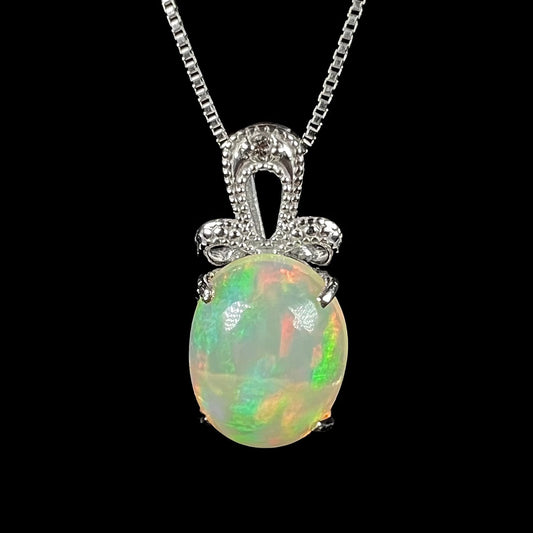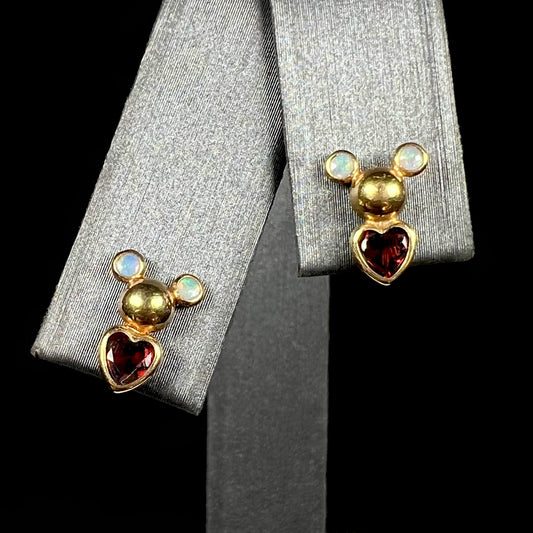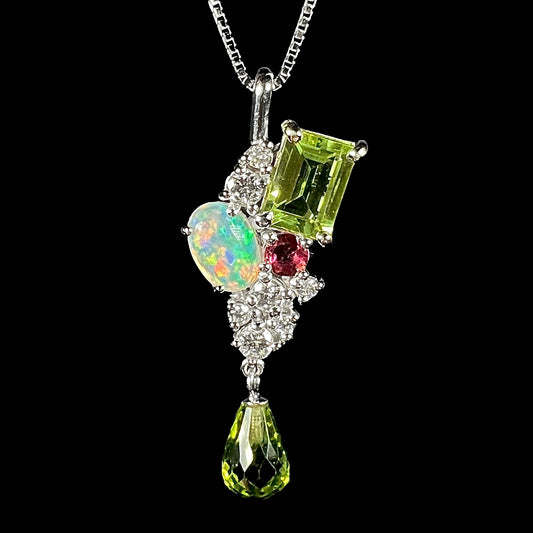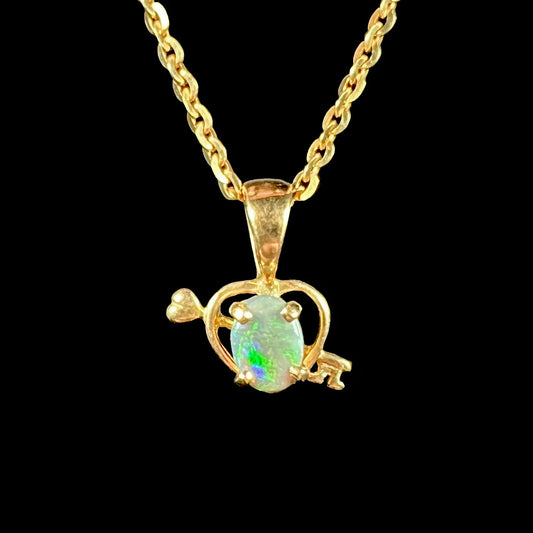
Collection: 18k Gold Opal Jewelry

Gold, At Its Richest.

18k gold opal jewelry represents the highest widely used gold standard—recognized for its substantial gold content, noticeable weight, and its use in finely made pieces across global jewelry traditions.

Each piece is documented with detailed photography and video, supported by OpalPop’s 14-day return window so you can evaluate craftsmanship and quality with confidence.


18k Gold Opal Jewelry: A Collector's Overview

OpalPop’s selection of 18k gold opal jewelry includes rings, pendants, and occasional earrings sourced from luxury estates, designers, and independent artists worldwide.  Both modern and vintage pieces are represented, from American Modernist designs of the 1980s opal boom to Japanese-crafted pieces dating back to the 1940s Mid-Century era.

Most featured opals are natural, though occasional assembled or enhanced stones appear and are always clearly disclosed.  All pieces contain solid 18k gold—while most are fully 18k, some incorporate sterling silver with solid 18k accents.  No plated or gold-filled items are included, allowing buyers seeking high-purity gold to browse with confidence.

In our broader Gold Opal Jewelry guide, we explain that “gold” is not a single material, but a range of choices across color, purity, and culture.  Here, the focus is 18k gold—what it is, how it performs, and why it holds a distinct position globally.

What is 18k Gold?  Purity & Position

18k gold is a solid gold alloy containing 75% pure gold by weight—18 parts gold out of 24.  The remaining 25% consists of alloying metals that influence durability, color, and workability.

Pure 24k gold is too soft for most jewelry applications, making alloying necessary.  In the United States, the most common standards are 10k, 14k, and 18k.  As purity increases, gold becomes more valuable and visually richer, but also softer and more prone to wear.

18k gold occupies the upper end of this spectrum.  In Western markets, it is typically associated with higher-end construction and is often used for finer gemstones.  In many global markets—particularly across Europe, Asia, and the Middle East—18k is not exceptional, but standard.

Heft & Value Retention of 18k Gold Jewelry

Among common American gold purities, 18k produces the heaviest finished pieces.  Gold itself is dense, and with fewer alloying metals present, 18k jewelry carries more physical weight than lower-karat equivalents.

This has two implications.

First, the added weight contributes to the overall cost of a piece beyond purity alone.  Second, a greater portion of that cost is tied directly to intrinsic gold value. Compared to 14k gold jewelry, 18k contains considerably more gold per gram, meaning more of the purchase price is allocated to the underlying metal.

As gold prices fluctuate, 18k jewelry reflects those movements more strongly on a dollar-for-dollar basis.

Example Breakdown: 18k vs 14k Gold

Consider a hypothetical 18k gold ring weighing 5 grams.  An identical ring in 14k gold would weigh approximately 14.8% less, or 4.26 grams.

At $1,400/oz (2019):

  • 18k gold value: $168.79
  • 14k gold value: $111.85
  • Difference: $56.94

At $5,400/oz (2026 peak):

  • 18k gold value: $651.05
  • 14k gold value: $431.41
  • Difference: $219.64

These figures reflect intrinsic gold value only, excluding craftsmanship and gemstones.  While not a rule, higher-karat construction is frequently paired with finer stones.

How Is 18k Gold Visually Different From 14k Gold?

As gold purity increases, differences in appearance become more noticeable—though the effect varies depending on alloy and color.

18k Yellow Gold vs 14k Yellow Gold Jewelry

The difference between 18k yellow gold jewelry and 14k is often immediately visible.  18k appears richer and more saturated, sometimes carrying a slightly orangey tone due to its higher gold content.  14k appears comparatively lighter.

For many buyers, this deeper color is a defining reason to choose 18k.

White gold was originally introduced to mimic the appearance of platinum jewelry.

18k White Gold vs 14k White Gold Jewelry

White gold is created by alloying gold with white metals such as nickel, zinc, or palladium, then typically finished with rhodium plating.

Because of this plating, there is no initial visual difference between 18k white gold jewelry and 14k.  Over time, however, as rhodium wears away, 18k’s higher gold content results in a slightly warmer underlying tone becoming more visible.  This can lead to more frequent replating for those sensitive to subtle color shifts.

18k Rose Gold vs 14k Rose Gold Jewelry

Rose gold derives its color from copper content.  Because 18k contains less alloy overall, 18k rose gold jewelry appears softer and pinker, while 14k rose gold tends to be more saturated and red due to higher copper concentration.

The Global History of 18k Gold Jewelry

Of the major gold purities used today, 18k has one of the longest continuous histories.

Since ancient civilizations, it has been understood that pure gold is too soft for practical use.  Early metallurgists alloyed gold to improve durability, often producing compositions equivalent to modern high-karat golds—typically between 18k and 22k.  These practices were refined by the Greeks and Romans.

During the European Middle Ages and Renaissance, 18k gold became widely used as a more durable alternative to higher purities.  By the Georgian era of the 1700s, it was firmly associated with fine jewelry and was recognized under British hallmarking standards in 1798.

When lower-karat alloys such as 9k jewelry, 12k, and 15k were introduced in 1854, 18k’s association with higher-end work became more clearly defined.

Expansion Across Global Markets

18k gold spread well beyond Europe.  It was adopted in the United States in the 19th century and formally recognized under the 1906 National Gold and Silver Marking Act alongside 14k and 10k.

At the same time, major opal discoveries in Australia fueled demand for high-quality jewelry in both the UK and US markets.

In Asia, particularly Japan and China, 18k gained prominence as Western jewelry influences spread in the late 19th century.  By the mid-20th century, Japan became a major importer of fine opals, mounting them primarily in 18k gold and platinum during its economic expansion.  Pieces of Japanese opal jewelry from this period still circulate in the modern vintage jewelry market.

Modern Positioning

Today, 18k gold remains widely used across global markets.  In the United States, it is often viewed as a higher-end option.  Internationally, it is simply standard—used across a wide range of jewelry types and gemstone qualities.

Its modern reputation as a “luxury” material has been reinforced by major design houses such as Cartier, Tiffany & Co., Van Cleef & Arpels, and Buccellati, all of whom continue to favor 18k in many of their designs.

Many fine 18k gold opal jewelry pieces available today originate from the 1980s and 1990s, a period marked by strong American imports of high-grade Australian opal.  Black opal and boulder opal were especially prominent, often mounted in 18k gold within artistic, asymmetrical Modernist designs that reflected the era’s emphasis on individuality and material presence.

Identifying 18k Gold Hallmarks

Due to its global use, 18k gold appears under a variety of hallmark systems.  These markings can often provide insight into a piece’s origin.

Common stamps include:

  • 18K (standard marking)
  • 18KP (“karat plumb,” exact purity designation, used most in American jewelry)
  • 750 (parts per thousand)
  • 18CT (UK/Australia)
  • K18 (Japan)

These are typically found in discreet areas such as ring shanks or pendant bails.

Important Distinctions

Not all “18k” markings indicate solid gold.

Common non-solid indicators include:

  • 18K HGE (heavy gold electroplate)
  • 18K GF (gold-filled, typically ~5% gold by weight—lower-karat purities are more common)
  • 925 (sterling silver base, sometimes gold-plated or accented)

Because 18k’s color is highly desirable, it is frequently used in plated jewelry.

At OpalPop, every piece is tested and verified prior to listing.  Any discrepancies between markings and material are documented clearly in product descriptions.

Dig Deeper

Explore more curated collections similar to 18k Gold Opal Jewelry: